Vik · Katla · 2026-08-16
Tag 4: Sonnige Überraschung und EiseskälteDay 4: Sunny surprise and icy cold
Heute Vormittag ist sehr gemütlich, wir schreiben ein, zwei Blogartikel und planen den nächsten Tag, was sich als knifflig herausstellt. Wir wollen morgen die Puffins (=Papageitaucher Vögel) auf Heimaey besuchen, allerdings ist das Wetter regnerisch gemeldet und für keine Sicht, Regen und extrem starken Wind 140€ für die Fähre (2 Personen + Auto) zu zahlen, klingt unsympathisch. Die Sorge ist also groß, dass wir womöglich keine sehen, obwohl um diese Jahreszeit die Puffin Kolonien ein Spektakel sein sollen. Hm..tja, solche Situationen hat man halt ab und zu beim Reisen - gegen Mutter Natur kommt man nicht an. Wir haben von der Rezeptionistin des Campingplatzes gehört, dass gestern Gäste von einer Puffinsichtung beim Strand berichtet hätten, also probieren wir unser Glück und sehen ein, zwei. äääähmmm:
https://youtube.com/shorts/9_OoArhK_BM?feature=share
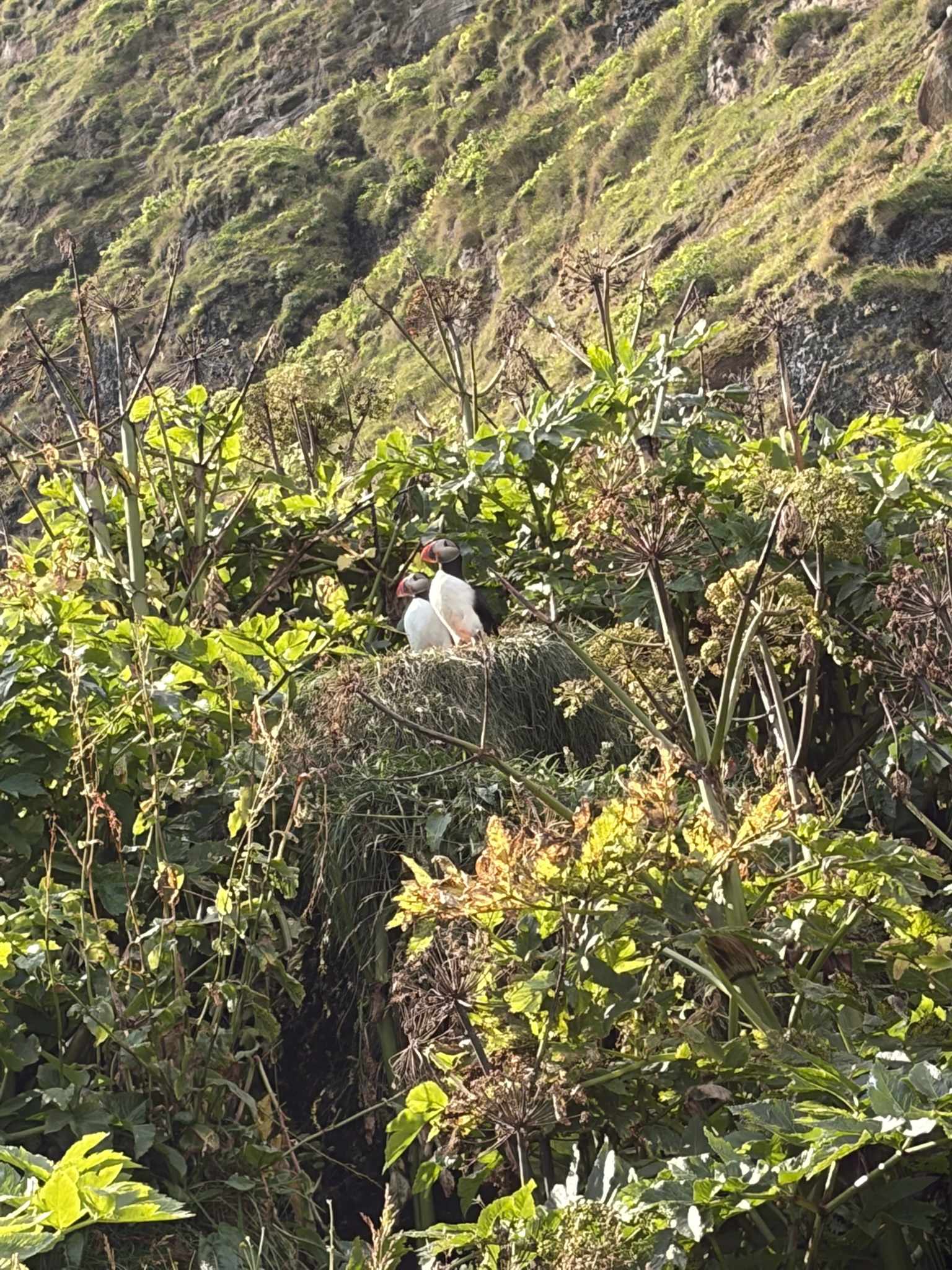
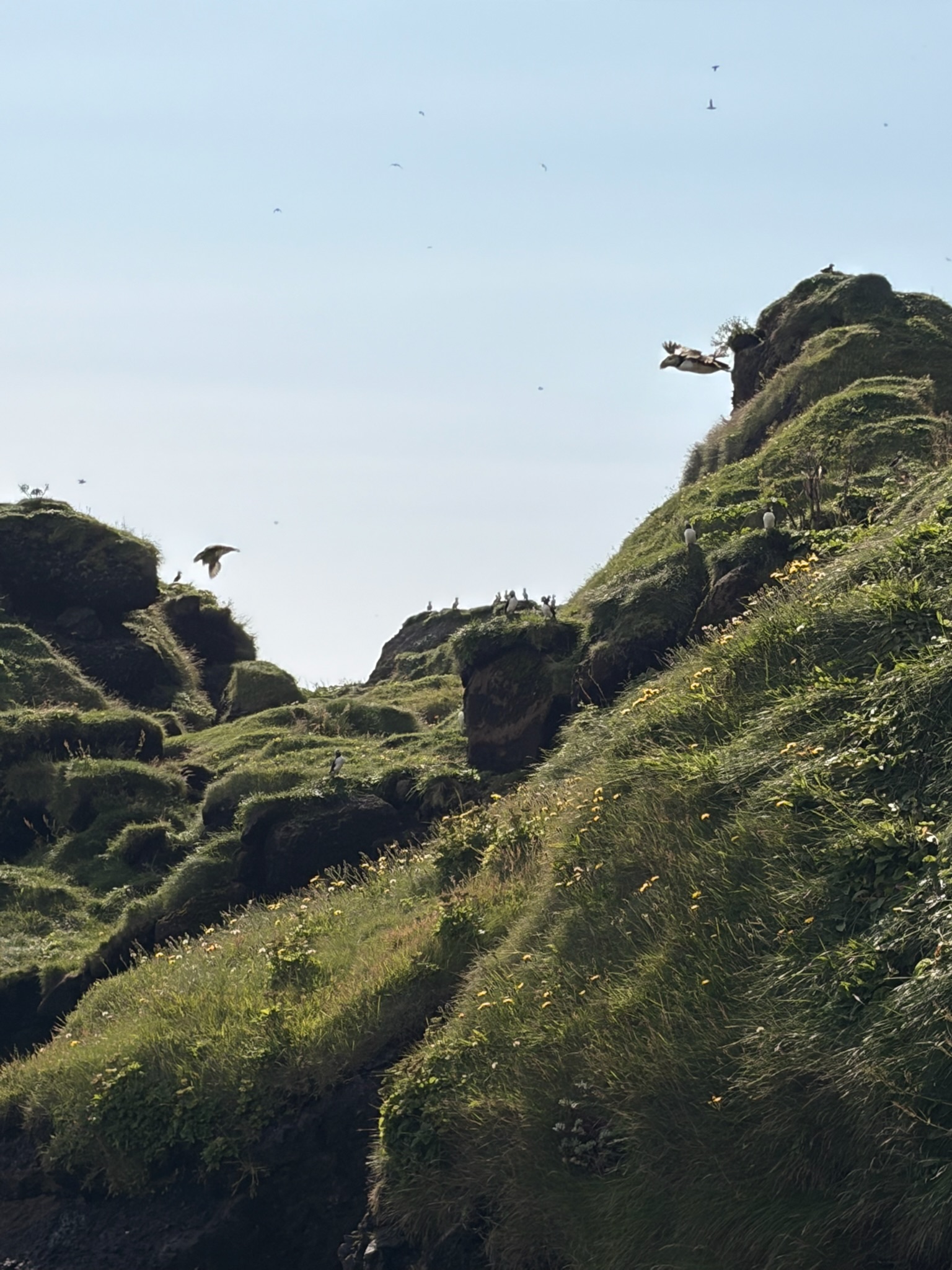
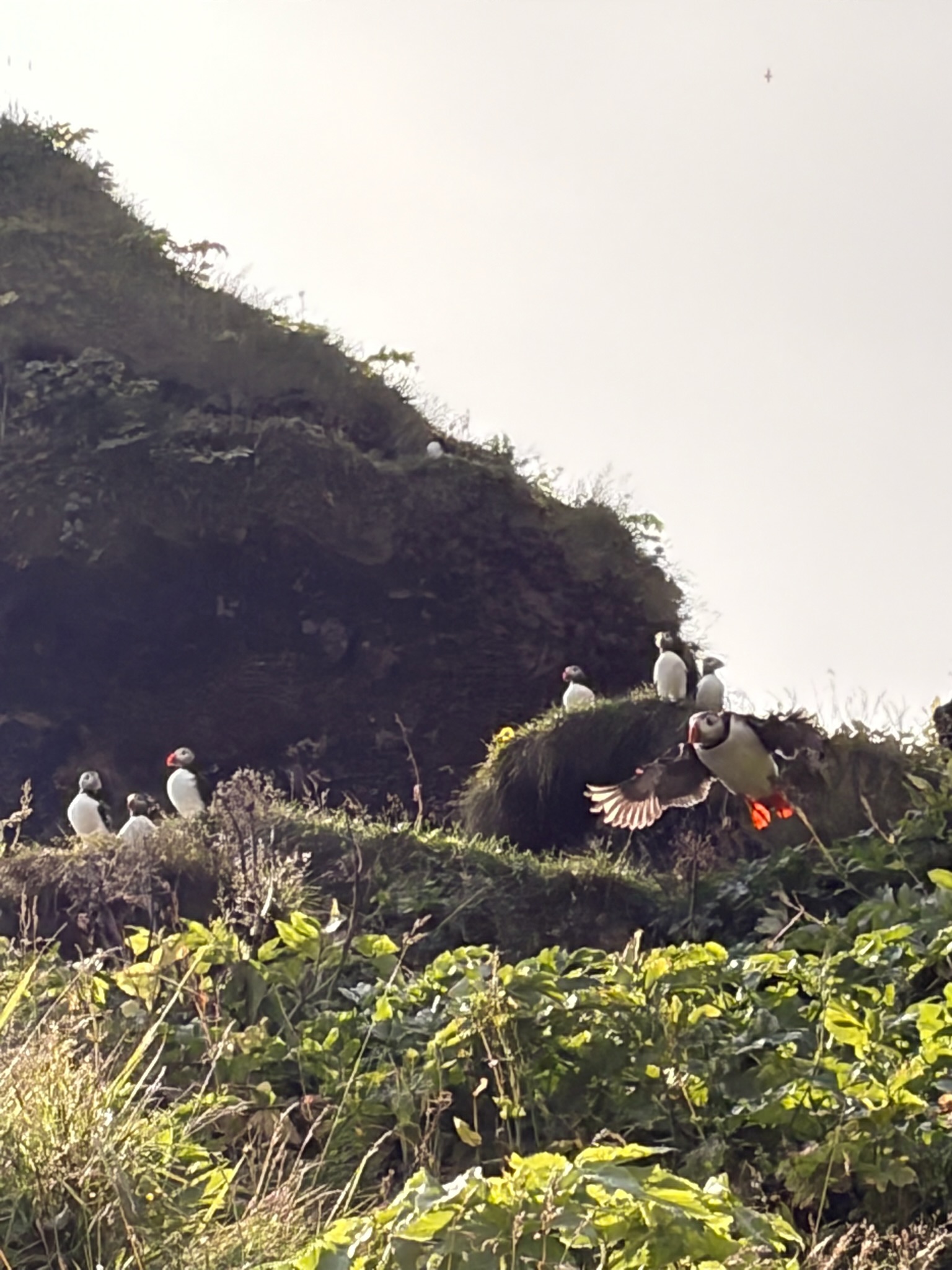
Komplett euphorisch suchen wir uns Platzerl, um die Puffins (isländisch: Lundi) so nah wie möglich zu sehen, ohne sie zu stören. Wir beobachten bestimmt mal für ne Stunde. So süß, wie sie alle mit gespreizten Beinchen abheben und über uns hinweg ins Meer fliegen, um wenig später mit kleinen Fischen im Mund zurückzukehren. Nebenbei schwimmt auch noch ne Robbe vorbei :) Whaaat?
Nach diesem wunderschönen Vormittag und einer kleinen Mittagsjause am Campingplatz ging's dann um 15:45 mit unserem geplanten Programm weiter, es geht zur Katla Eishöhle mit Gravel Travel (Anbieter). Die Katla ist einer der aktivsten Vulkane in Island und brach das letzte Mal 1918 aus - im Schnitt bricht sie alle 100 Jahre 2x aus - das heißt sie ist eigentlich überfällig. Mit diesem Wissen in die Nähe dieses Vulkans zu fahren war doch etwas speziell aber wie groß sind schon die Chancen?
Mit unserem Tourguide “Jon” ging's dann im Superjeep in Richtung Katla. Der Katla ist einer der isländischen Vulkane welcher durch einen Gletscher bedeckt ist. (ähnlich wie die Vulkane in der Gegend des Vatnajökull) - der Gletscher hier nennt sich “Myrdalljökull” und ist in viele Gletscherzungen unterteilt, deren Namen wir und beim besten Willen nicht alle merken können. Unser Guide meinte es gibt in Island laut Karten 6 große Gletschergebiete - diese Gebiete sind aber in so viele einzelne Gletscher unterteilt, dass man in Summe von > 260 Gletscher in Island spricht.
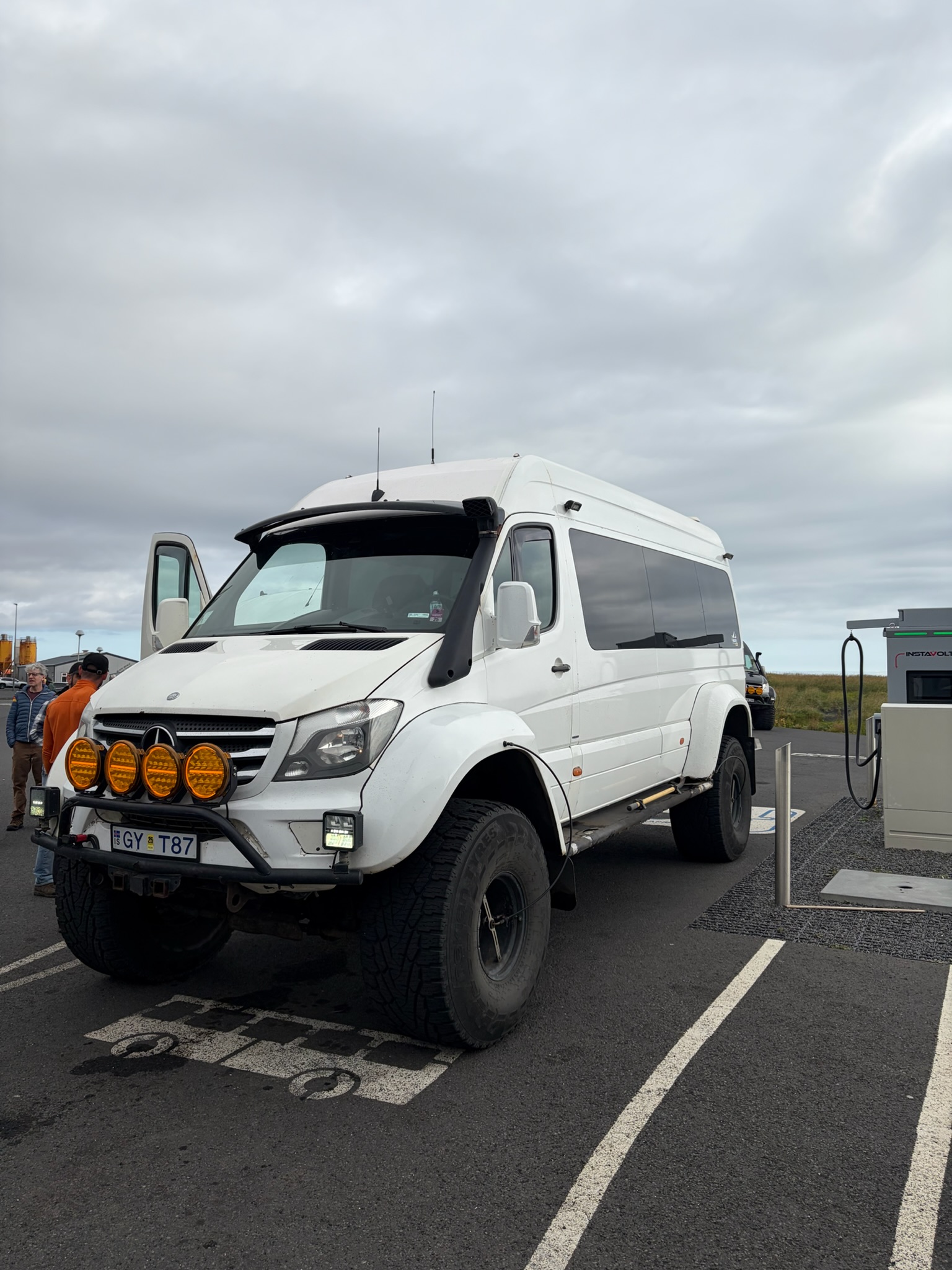
Beim letzten Ausbruch des Katlas wurde - ähnlich wie im letzten Artikel beschrieben - riesiges Schwemmlandgebiet durch die Schmelze des Gletschers erzeugt, dass ein Fluss entstanden ist, der mehr Wasser führte wie der Amazonas, Nil und Mississippi zusammen. Dies resultierte darin, dass in der Umgebung zu Vik eigene landschaftliche “Schwemmlandsperren” errichtet wurden, sodass bei einem zukünftigen Ausbruch die Stadt nicht wie Atlantis versinkt.
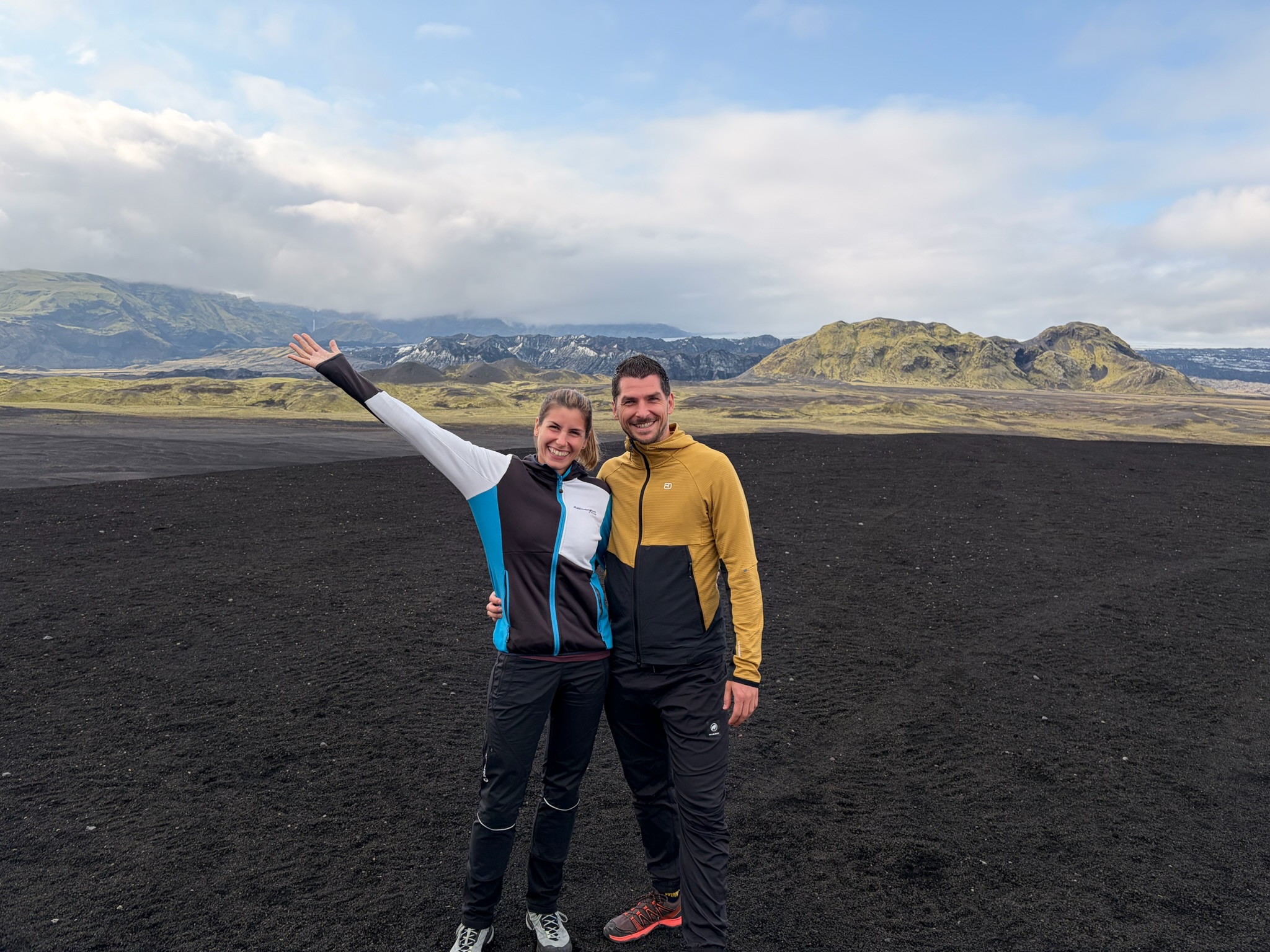
Es ist eine sehr lustige, holprige “bumpy” Fahrt bis zum ersten Stopp, dem Star Wars Berg, da dort Szenen für die Star Wars Filme gedreht wurden, u.a. Rogue One und als wir dort ankamen ist uns ganz deutlich wieso:
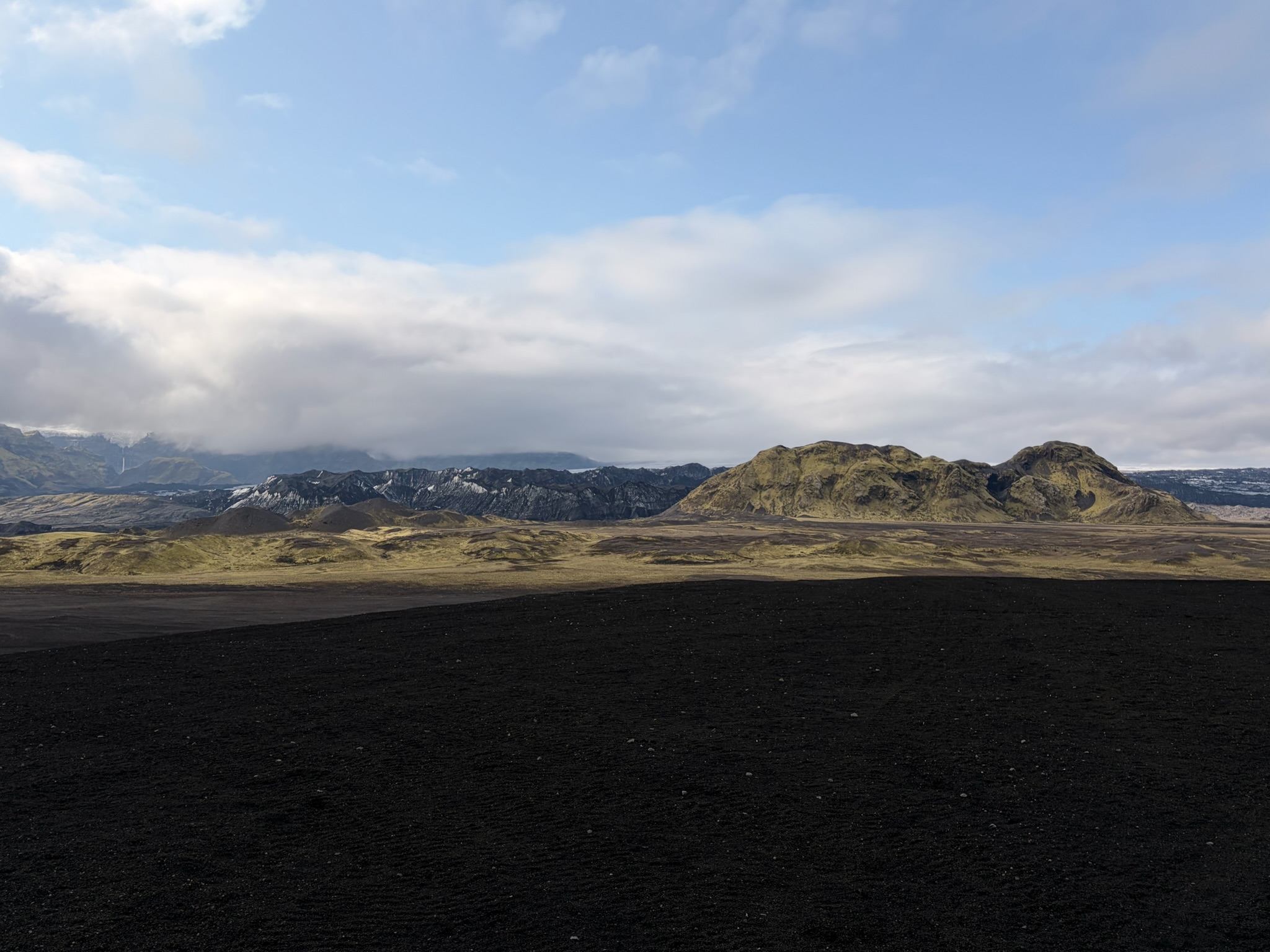
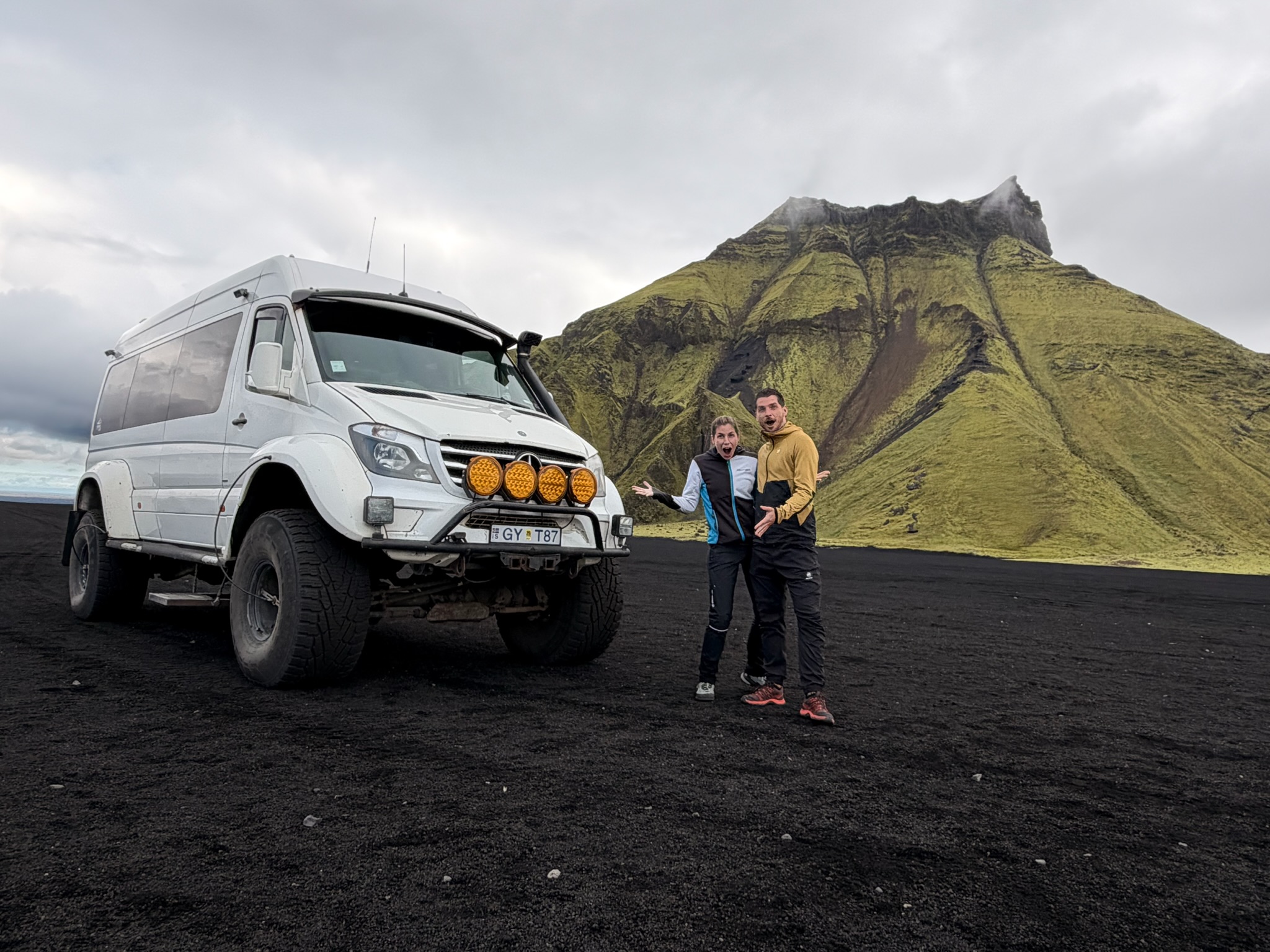
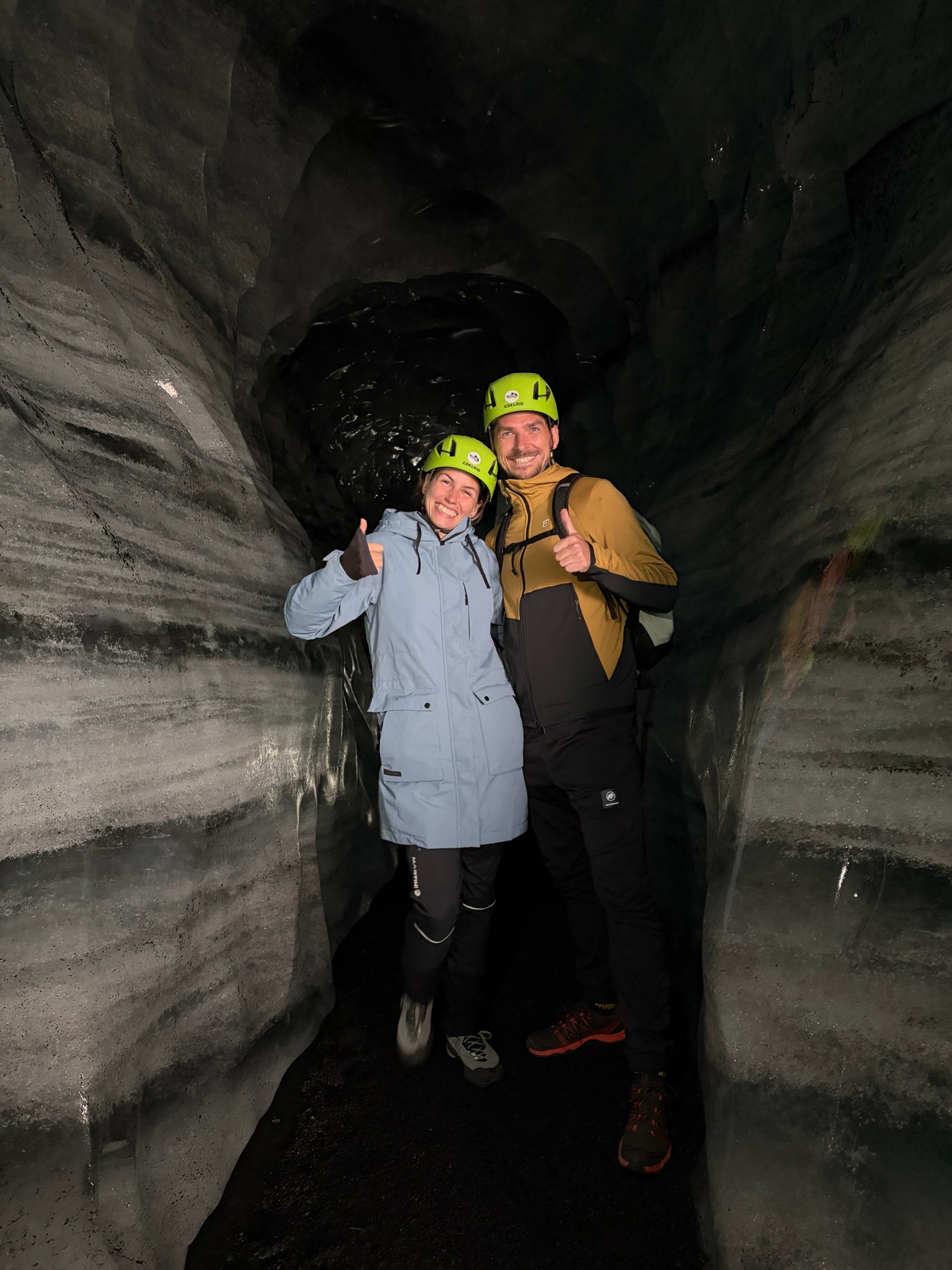
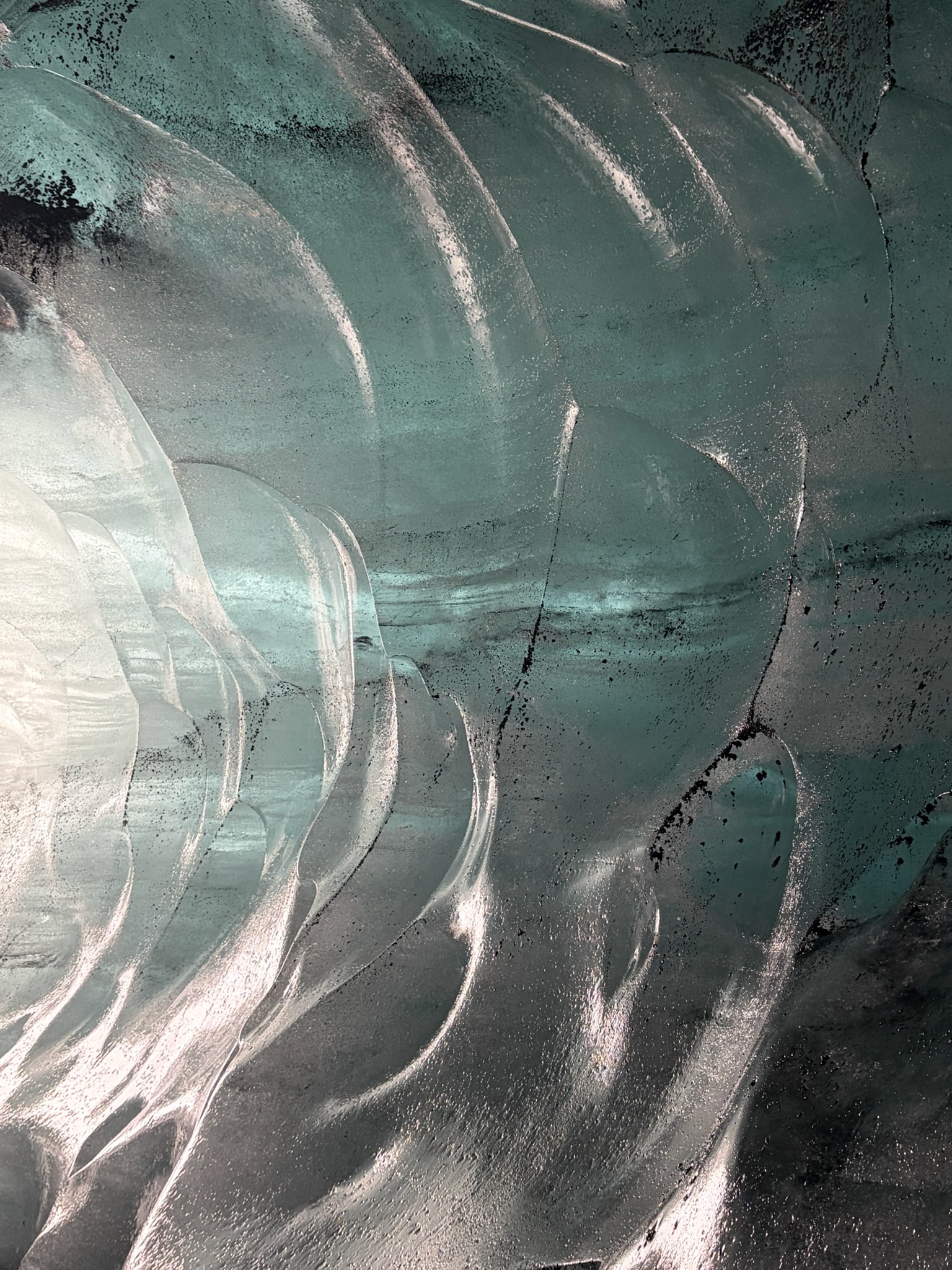
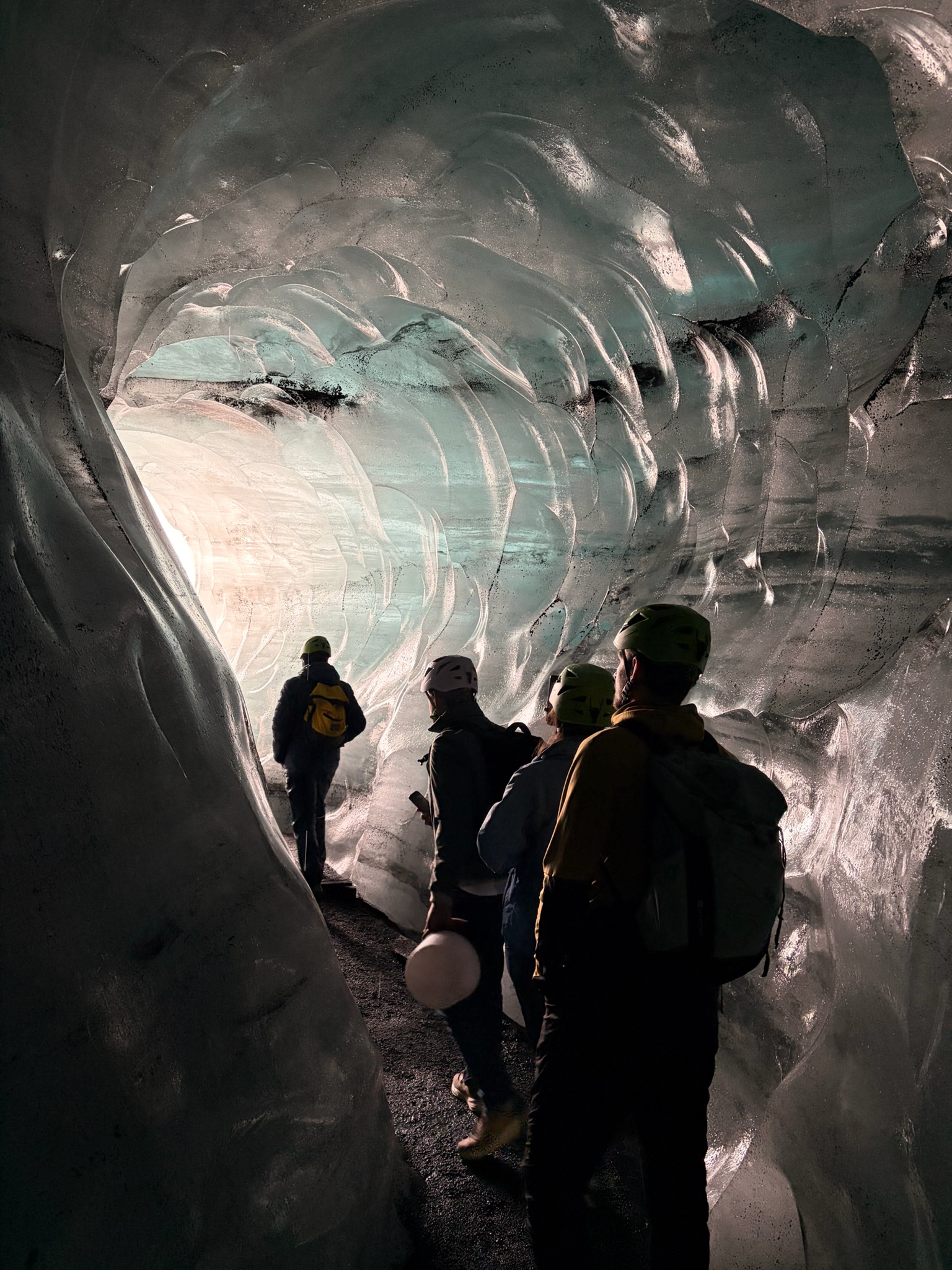
Es wurden übrigens unzählige andere Filme und Serien in Island gedreht wie zB James Bond, Interstellar, Game of Thrones, The Odyssee uvm. Wieder zurück in den SuperJeep und ab geht die Post. Einer Achterbahn ähnelnd flitzen wir die Sandbank steil hinunter Richtung Gletscher - jiiiiihaaaaaa! Beim “Parkplatz” der Eishöhle angelangt setzen wir uns alle Helme auf, bekommen heiße Tipps, wie dass man vermeiden sollte auf feuchten Untergrund zu steigen, da dieser wie Treibsand wirken kann und man schnell mal 1m in der Erde steckt, oder, dass man flott die Brücke zur Höhle queren sollte, da man sonst möglicherweise von kleinen Steinen im Zuge des Schmelzwassers getroffen wird - Gottseidank hat uns nichts getroffen :D In der Höhle lernen wir vom 800 Jahre alten Eis und deren Schichten, unterschiedlich hoch eingefrorene Asche, die auf mehrere Vulkanausbrüche hinweist und mehr. Danke Jon, es war sehr informativ und gleichzeitig unterhaltsam. Überrascht hat uns Jon mit seinen Fotografen Skills, mit denen er alle glücklich machte :D Am Ende lässt Jon uns alle Lichter in der Höhle ausmachen, um komplette Finsternis zu erfahren - schon bisschen gruselig.
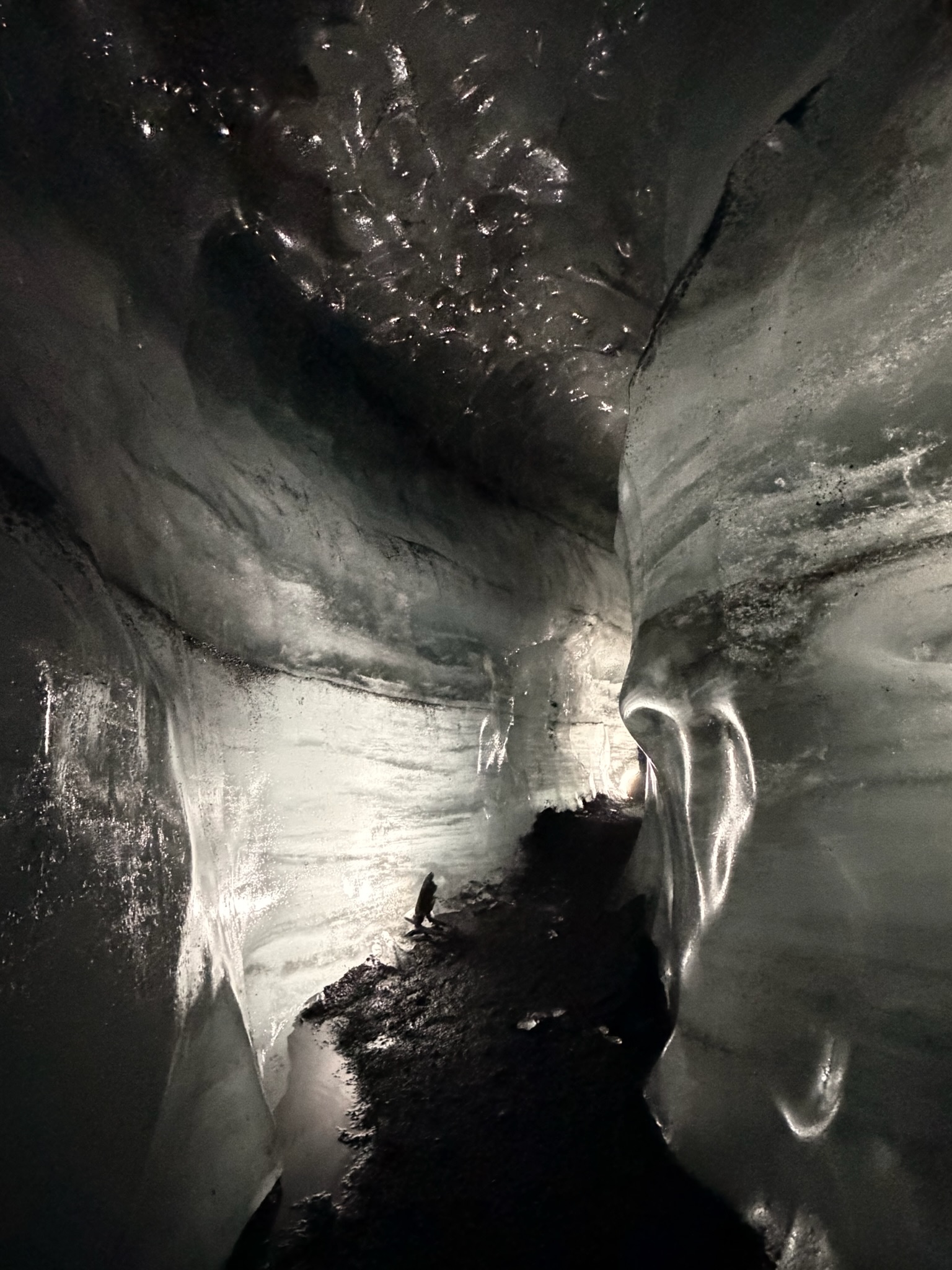
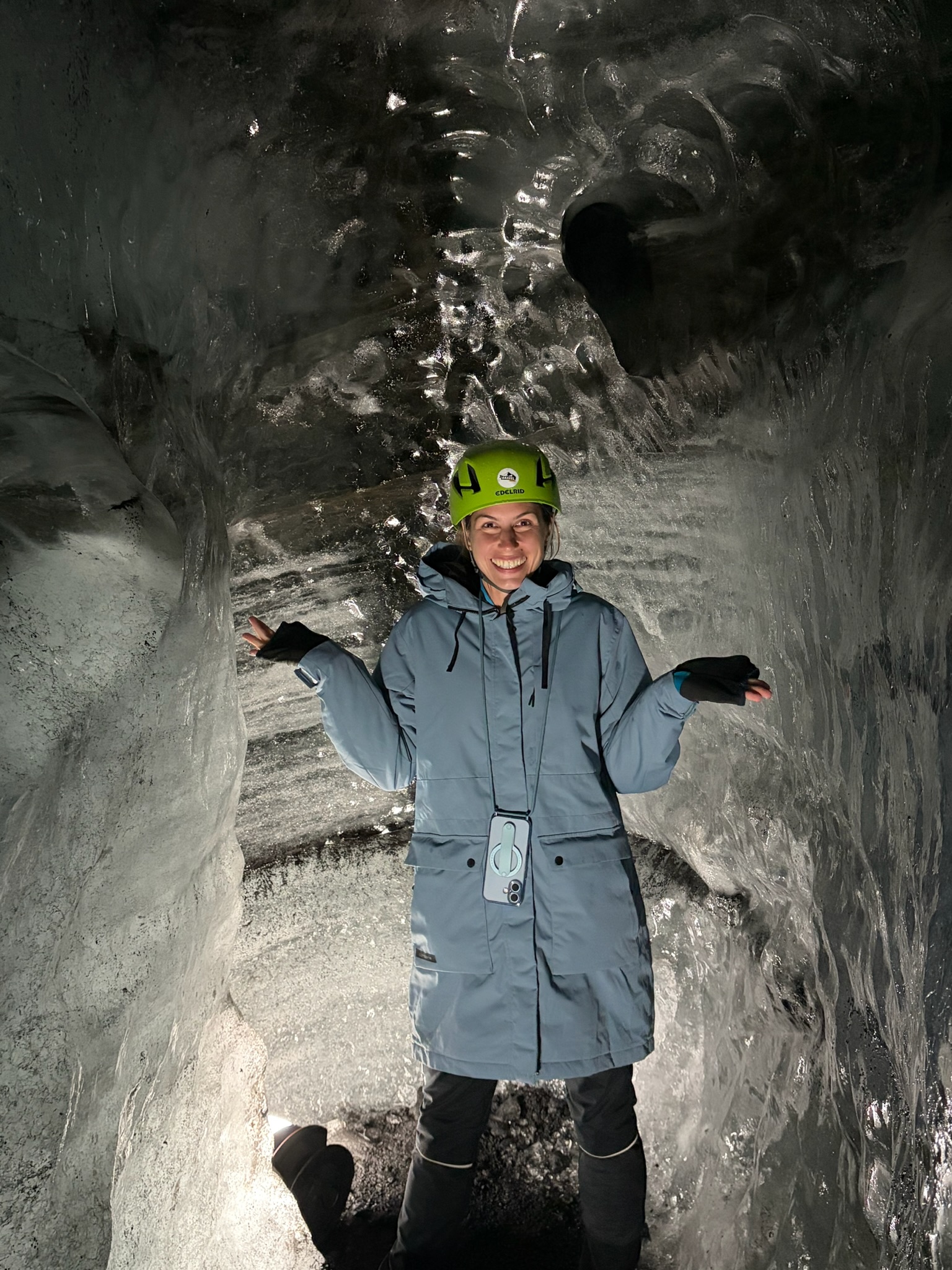
Nach dem Höhlenerlebnis war Patci noch danach sich ihrer eigenen Business Idee zu widmen. Crushed Ice Produzent dürfte ihre neue Geschäftsidee sein - ob das wohl was wird?
Auf dem Weg zurück erzählt uns Jon noch von den ersten Vikingern wie Hjörleifur, der als 2.Vikinger auf Hjörleifshöfdi angelegt hatte. Er nahm Irische Sklaven mit, die höchst anstrengende Arbeit verrichten mussten, bis sie Hjörleifur ermordeten und mit seiner Frau zu den Vestmannaeyjar Inseln flohen (=Westmännerinseln auf Deutsch), die so genannt werden, weil man zu den Iren “Vestmanna" sagte. Der 1.Vikinger (Ingolfur Arnarson), der in Reykjavik (=rauchende Bucht) angelegt hatte, wollte seinen Freund Hjörleifur besuchen. Als er sah, dass dieser ermordet wurde, ging er auf Rache-Jagd, tötete alle Iren und befreite die Frau. Ingolfur ist der bekannteste Vikinger auf Island.
Weiters erzählt uns Jon von J.R.R.Tolkin (britischer Schriftsteller der “Herr der Ringe” und “Hobbit” Reihen), der für seine Kinder ein isländisches Kindermädchen angestellt hatte. Sie erzählte den Kindern ganz typisch isländische Geschichten über Trolle und Elfen. Als sie aufhörte, für die Familie zu arbeiten, waren die Kinder ganz enttäuscht. Aufgrund dessen fand J.R.R. Tolkin die Motivation und Inspiration für die Geschichten von “Herr der Ringe”.
Nach dem Geschichten Erzählen gibt's eine letzte Überraschung, als Jon mit uns auf den Black Beach abzweigt und wir ganz nah — teils sogar im Wasser — bis zum Ausgangspunkt Zurückdüsen :) Also mit 70km/h mit nem SuperJeep entlang der krachenden Wellen auf schwarzem Strand fahren HAT WAS :) Gerne wieder!
https://youtube.com/shorts/bXfjtlMy0gc?feature=share
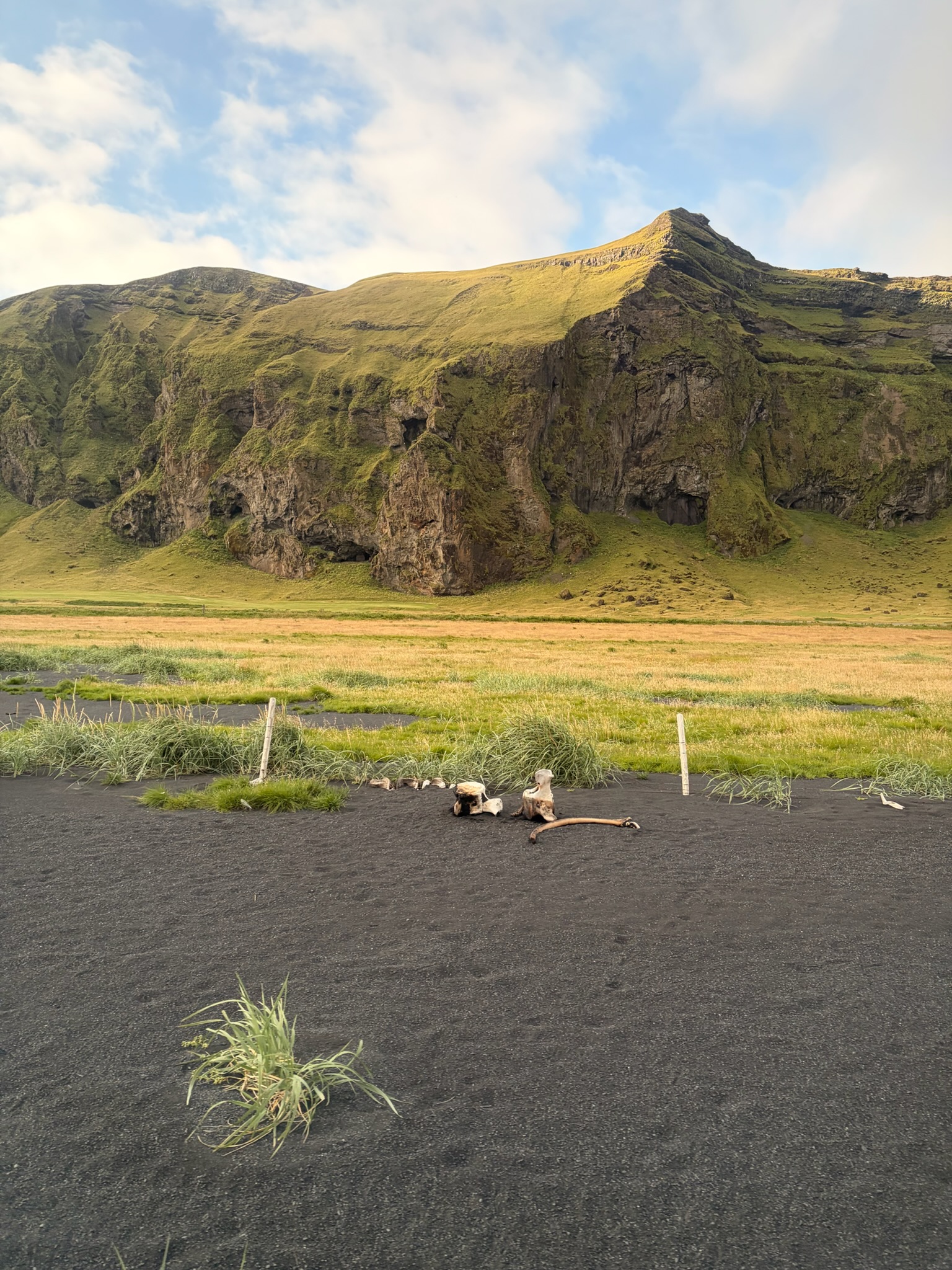
Zusätzlich hatte der Guide noch eine kleine “extra” Überraschung für uns - vor wenigen Monaten hat es leider einen toten Wal an genau diesem Strand angeschwemmt - mittlerweile ist der Wal natürlich nicht/kaum mehr zu sehen aber die Knochen wurden am gesamten Strand verteilt - wie hier eindrucksvoll zu sehen ist:
Am Abend parken dann noch zufällig unsere Freunde von der Fähre neben uns - einige hunderte km später - Was für ein Tag! :)
This morning is very relaxed, we write one or two blog posts and plan the next day, which turns out to be tricky. Tomorrow we want to visit the puffins on Heimaey, but the weather is forecast to be rainy, and paying 140 € for the ferry (2 people + car) for no visibility, rain and extremely strong wind sounds unappealing. So there's a big worry that we might not see any, even though at this time of year the puffin colonies are supposed to be a spectacle. Hm.. well, you just get situations like this now and then when travelling - you can't win against Mother Nature. We heard from the campsite receptionist that yesterday guests reported a puffin sighting at the beach, so we try our luck and see one or two. ummm:
https://youtube.com/shorts/9_OoArhK_BM?feature=share
Completely euphoric, we look for little spots to see the puffins (Icelandic: Lundi) as close as possible without disturbing them. We watch for a good hour for sure. So cute, how they all take off with splayed little legs and fly over us out to sea, only to return a little later with small fish in their mouths. Meanwhile a seal even swims by :) Whaaat?
After this wonderful morning and a small lunch snack at the campsite, we continued at 3:45 pm with our planned programme: off to the Katla ice cave with Gravel Travel (provider). The Katla is one of the most active volcanoes in Iceland and last erupted in 1918 - on average it erupts twice every 100 years - meaning it's actually overdue. Driving near this volcano with that knowledge was a bit special, but how big are the chances, really?
With our tour guide "Jon" we then set off in the super jeep towards Katla. The Katla is one of the Icelandic volcanoes that is covered by a glacier (similar to the volcanoes in the Vatnajökull area) - the glacier here is called "Myrdalljökull" and is divided into many glacier tongues whose names we can't possibly all remember. Our guide said that, according to maps, there are 6 large glacier areas in Iceland - but these areas are divided into so many individual glaciers that in total people speak of > 260 glaciers in Iceland.
During the last eruption of the Katla - similar to what was described in the last article - a huge outwash area was created by the glacier's melt, so that a river formed that carried more water than the Amazon, Nile and Mississippi combined. This resulted in special landscape "outwash barriers" being built around Vik, so that in a future eruption the town doesn't sink like Atlantis.
It's a very fun, bumpy ride to the first stop, the Star Wars mountain, since scenes for the Star Wars films were shot there, among them Rogue One, and when we arrived it was very clear why:
By the way, countless other films and series were shot in Iceland, such as James Bond, Interstellar, Game of Thrones, The Odyssey and much more. Back into the super jeep and off we go. Resembling a rollercoaster, we zip steeply down the sandbank towards the glacier - yeeeehaaaa! Arriving at the ice cave's "car park", we all put on helmets and get hot tips, such as that you should avoid stepping onto wet ground, since it can act like quicksand and you can quickly find yourself stuck 1 m in the earth, or that you should cross the bridge to the cave quickly, since otherwise you might get hit by small stones carried along by the meltwater - thank goodness nothing hit us :D In the cave we learn about the 800-year-old ice and its layers, ash frozen in at different heights pointing to several volcanic eruptions, and more. Thanks Jon, it was very informative and entertaining at the same time. Jon surprised us with his photography skills, with which he made everyone happy :D At the end, Jon has us all turn off the lights in the cave to experience complete darkness - a bit creepy.
After the cave experience, Patci felt like dedicating herself to her own business idea. Crushed ice producer might be her new business idea - I wonder if that'll work out?
On the way back, Jon tells us about the first Vikings, like Hjörleifur, who was the 2nd Viking to land at Hjörleifshöfdi. He brought Irish slaves who had to do extremely strenuous work, until they murdered Hjörleifur and fled with his wife to the Vestmannaeyjar islands (= Westman Islands in English), so named because the Irish were called "Vestmanna". The 1st Viking (Ingolfur Arnarson), who had landed in Reykjavik (= smoking bay), wanted to visit his friend Hjörleifur. When he saw that he'd been murdered, he went on a revenge hunt, killed all the Irish and freed the woman. Ingolfur is the most famous Viking in Iceland.
Jon also tells us about J.R.R. Tolkien (the British author of the "Lord of the Rings" and "Hobbit" series), who had hired an Icelandic nanny for his children. She told the children very typical Icelandic stories about trolls and elves. When she stopped working for the family, the children were quite disappointed. Because of that, J.R.R. Tolkien found the motivation and inspiration for the "Lord of the Rings" stories.
After the storytelling there's one last surprise, as Jon branches off with us onto the Black Beach and we race back very close to it - partly even in the water - all the way to the starting point :) So driving at 70 km/h in a super jeep along the crashing waves on a black beach HAS SOMETHING TO IT :) Happy to do it again!
https://youtube.com/shorts/bXfjtlMy0gc?feature=share
In addition, the guide had a small "extra" surprise for us - a few months ago, unfortunately, a dead whale washed up on exactly this beach - by now the whale is of course barely/no longer visible, but the bones were spread across the entire beach - as can be seen impressively here:
In the evening, our friends from the ferry happen to park next to us again - several hundred km later - What a day! :)
Liebste Grüße,