Husavik · 2026-08-31
Tag 19: Unser letztes echtes HighlightDay 19: Our last real highlight
Heute ging's für uns von unserem Campingplatz in Laugar weiter Richtung Húsavík - und dieser kleine Ort hatte für uns (zumindest für mich - Patci durfte in ihrem Auslandssemester in Kanada bereits ähnliches erleben) eines der absoluten Highlights der gesamten Reise auf Lager. Ein bisschen Kontext vorweg: Húsavík ist ein beschauliches Küstenstädtchen mit gerade mal rund 2.300 Einwohnern, das direkt an der Bucht Skjálfandi liegt - und sich völlig zurecht den Titel "Wal-Hauptstadt Islands" (manche sagen sogar Europas) auf die Fahnen geschrieben hat. Die nährstoffreichen Gewässer der Bucht sind im Sommer ein einziger, riesiger Futtertisch für Wale, weshalb Jahr für Jahr rund 100.000 Menschen von hier aus in See stechen, um genau diesen sanften Riesen zu begegnen. Aber erstmal der Reihe nach…
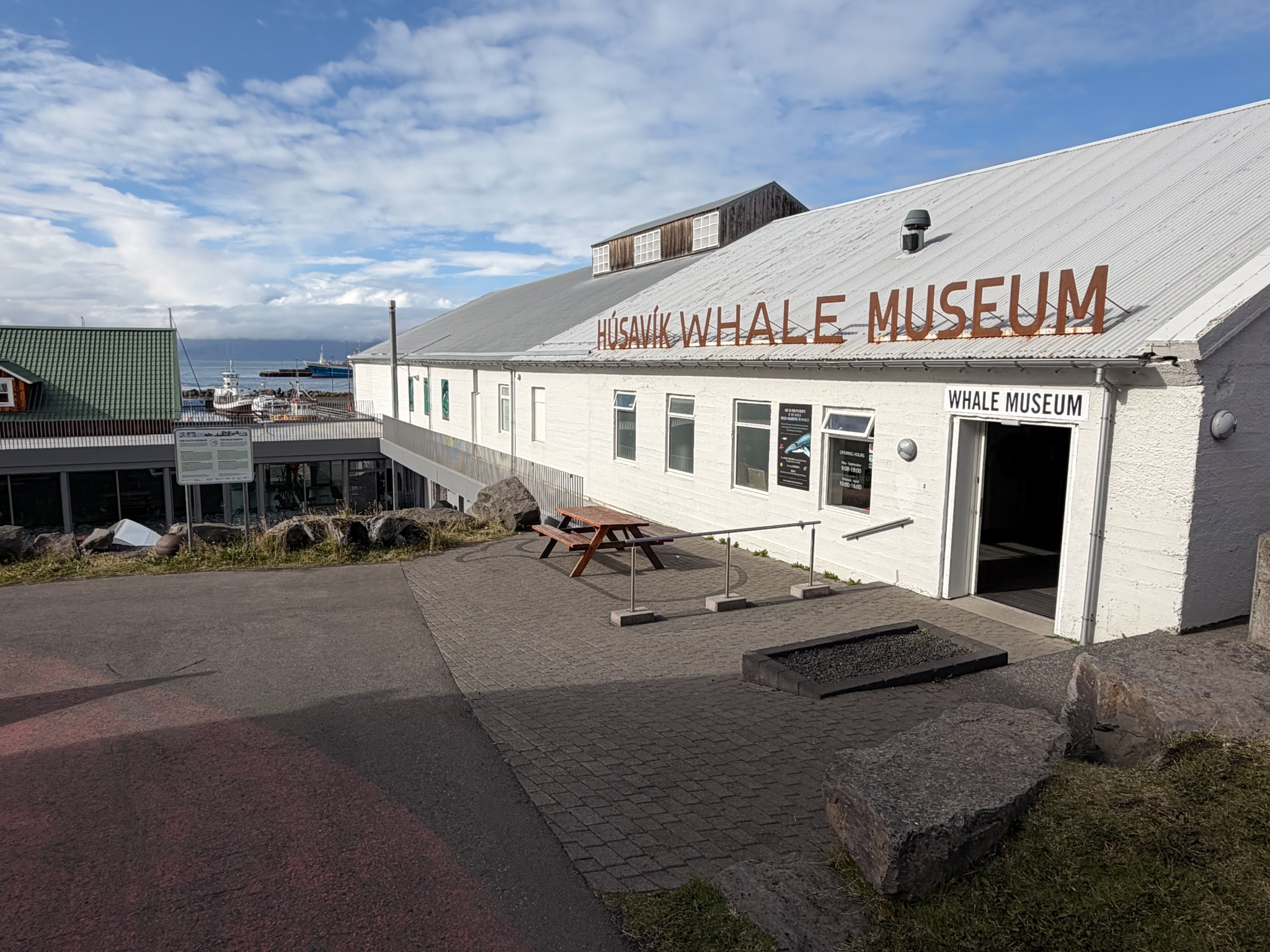
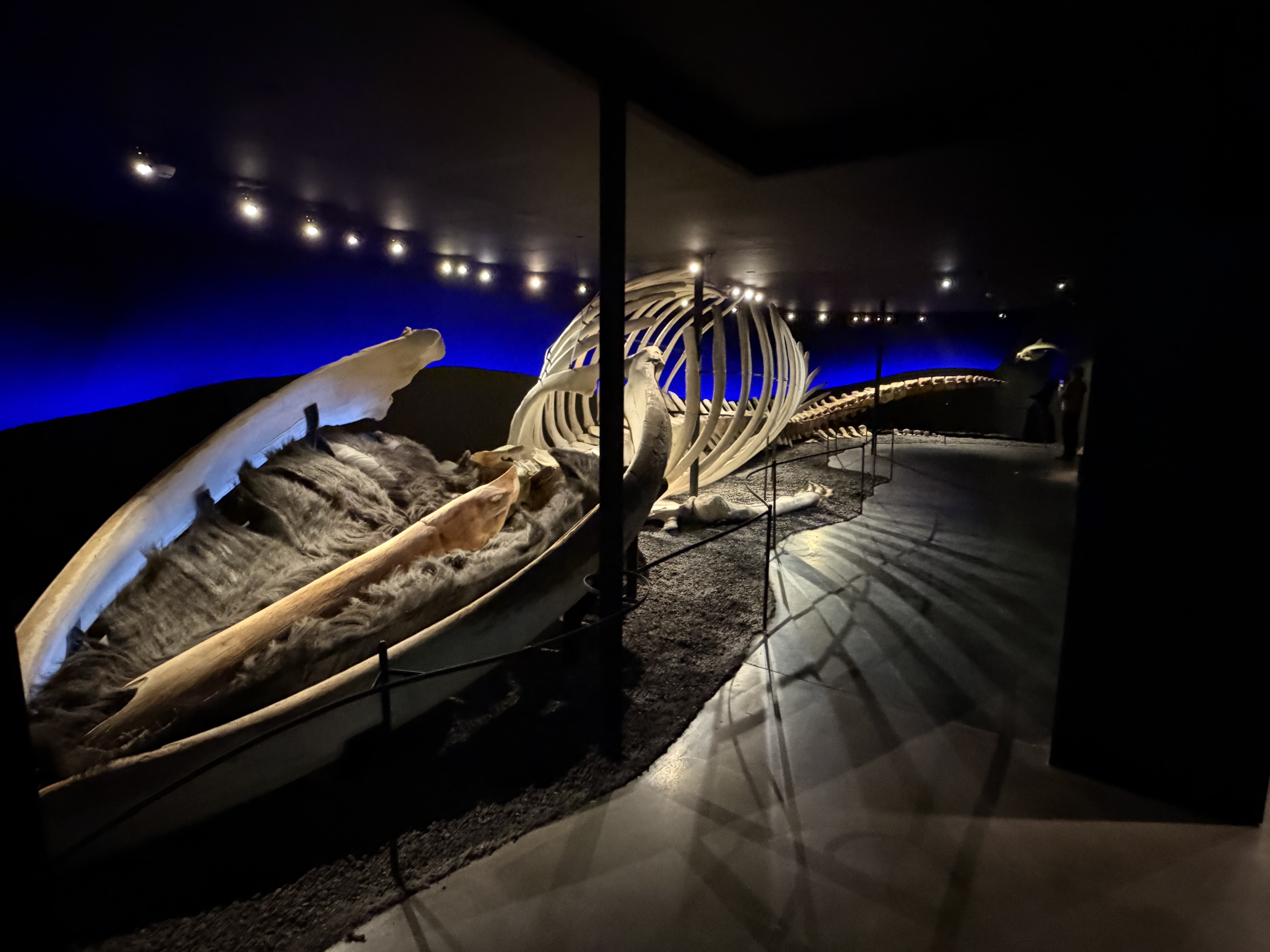
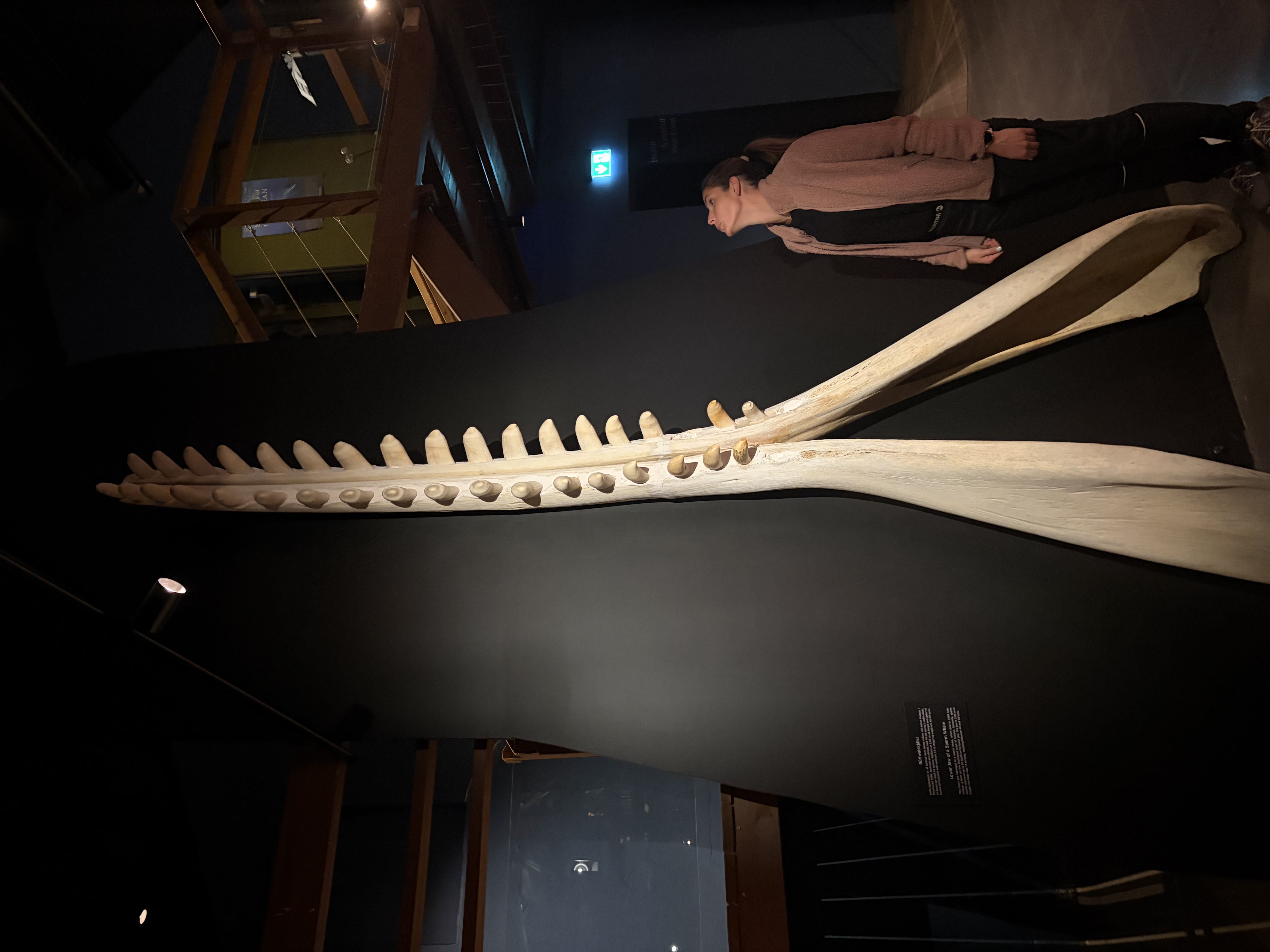
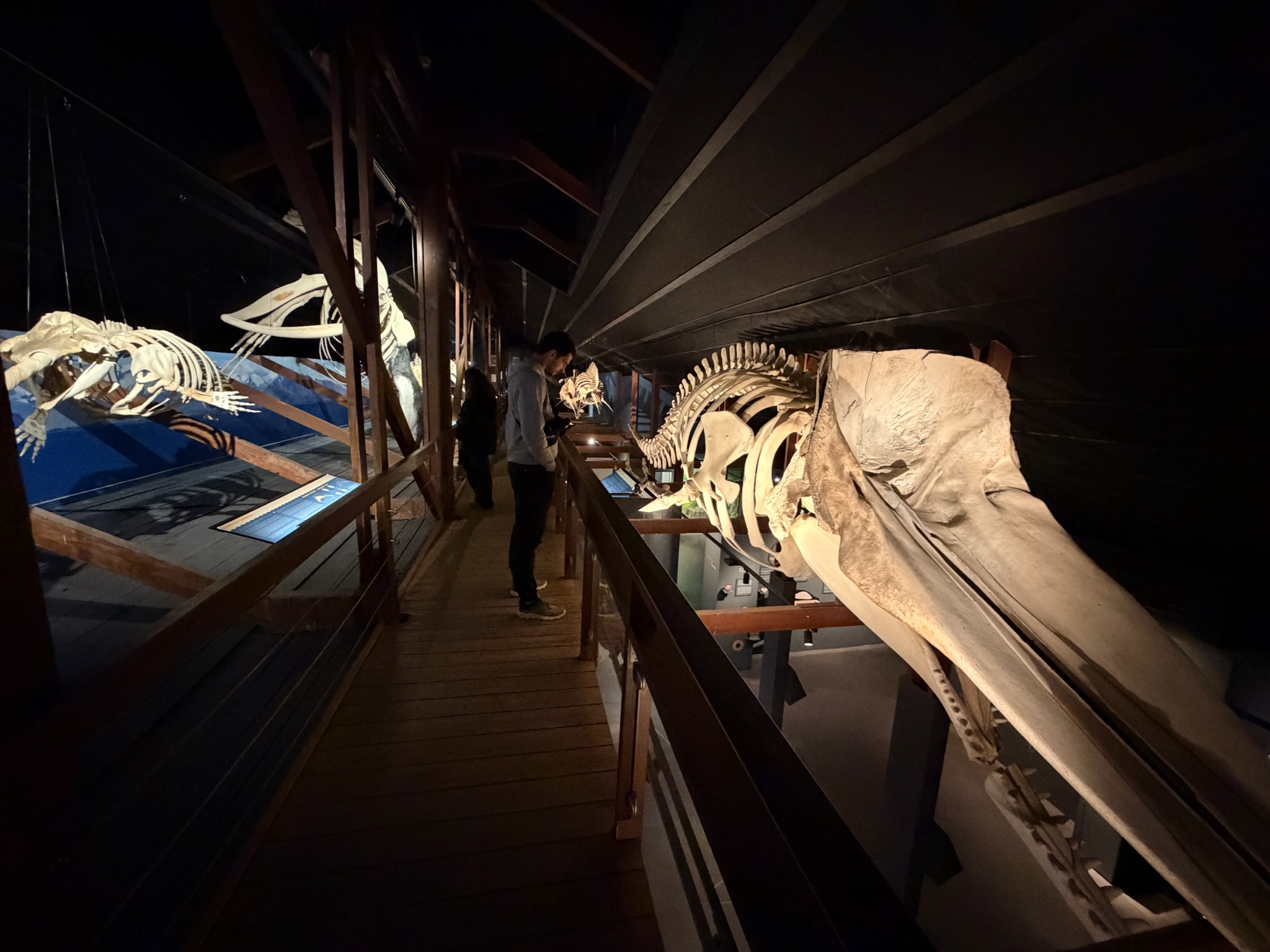
Den Tag ließen wir ganz gemütlich in ein paar der süßen Souvenirläden des Ortes starten, bevor's dann weiter ins Húsavík Whale Museum ging. Und dieses Museum ist wirklich einen Besuch wert: Es ist in der ehemaligen Schlachthalle des Ortes untergebracht und beherbergt auf rund 1.600 m² 12 echte Walskelette. Das absolute Prunkstück - und hier wird's kurz zahlenlastig für alle Interessierten - ist das 25 Meter (!) lange Skelett eines Blauwals, des größten Tieres, das auf unserem Planeten lebt. Man geht auf der oberen Ebene den sogenannten "Whale Walk" entlang, also mitten hindurch zwischen den aufgehängten Skeletten der verschiedenen Arten, und bekommt so ein richtiges Gefühl für die schiere Dimension dieser Tiere. Nebenbei betreibt das Museum auch aktive Forschung an den Walen der Skjálfandi-Bucht - ein Punkt, der später am Tag nochmal wichtig werden sollte.
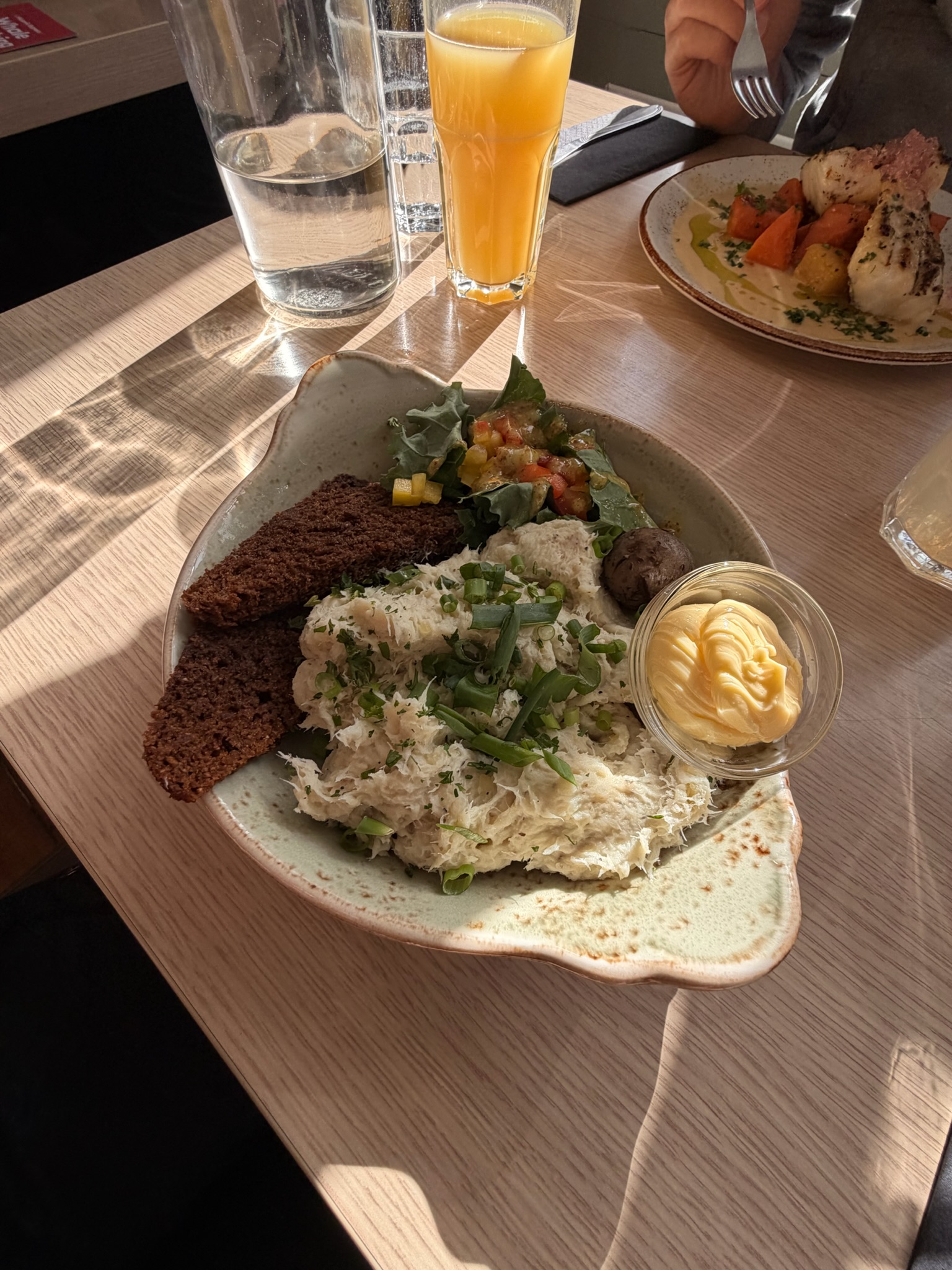
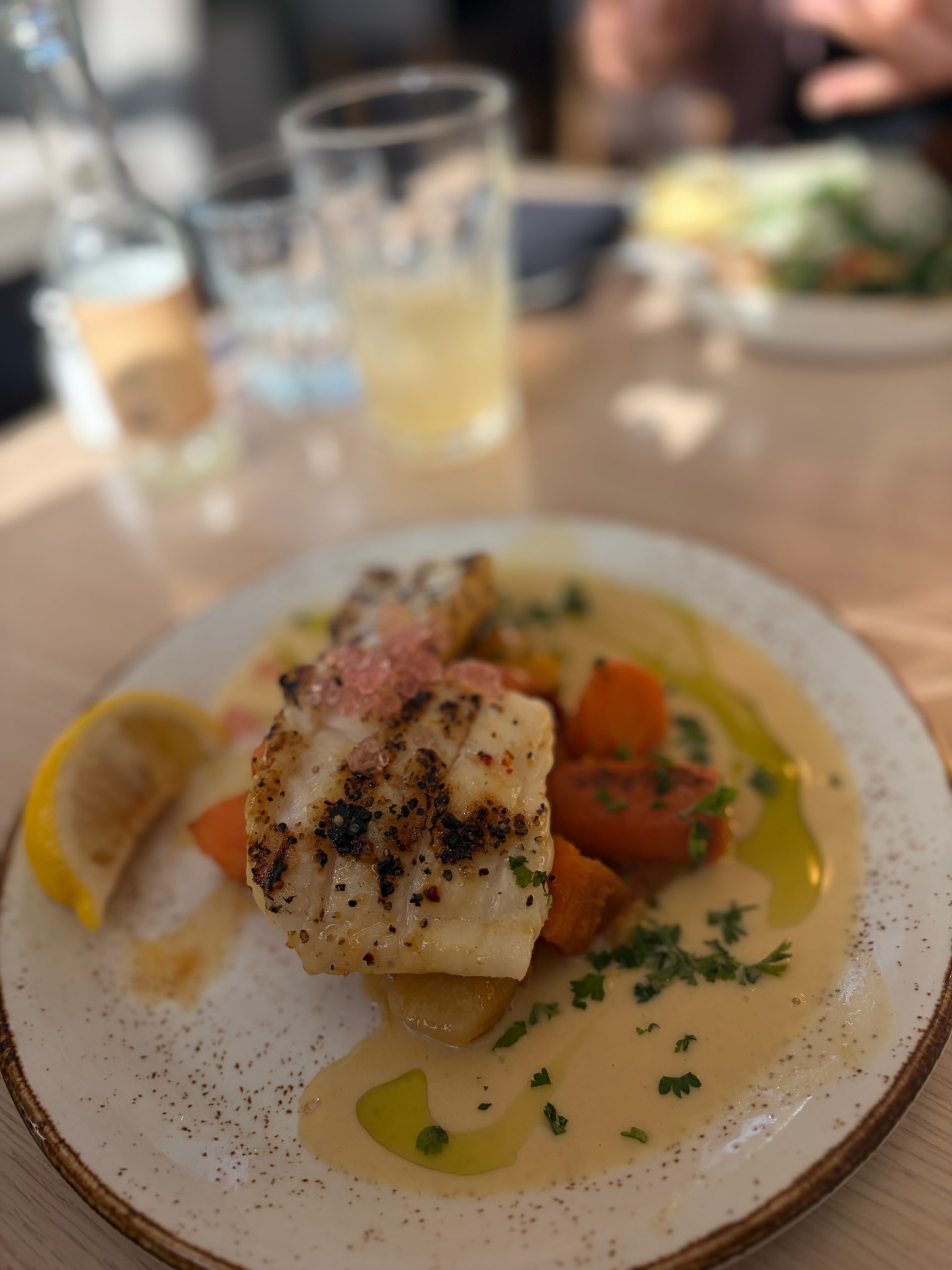
Bevor's aufs Wasser ging, war aber erstmal eine ordentliche Stärkung fällig, und die holten wir uns im Restaurant "Naustið" - einem kleinen, feinen Fischrestaurant mitten im Ort. Das Lokal ist in einem von außen eher alt wirkenden Gebäude untergebracht und hat einen gewissen Charme. Fangfrischer Fisch, in geothermalen Quellen gebackenes “Lava Brot” und Fischsuppe, für die das Haus quasi berühmt ist - genau das, was wir brauchen um in den restlichen Tag zu starten.
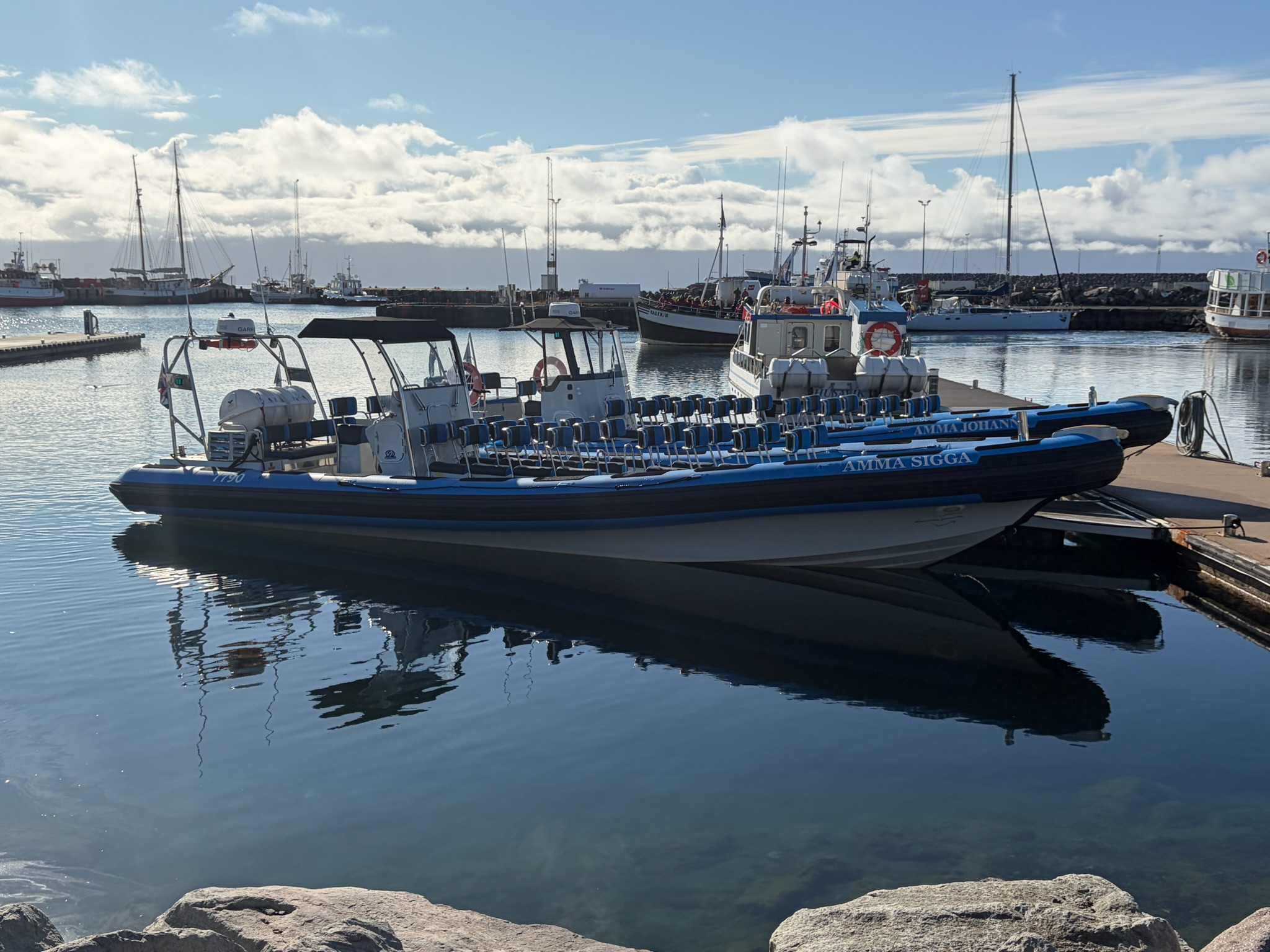
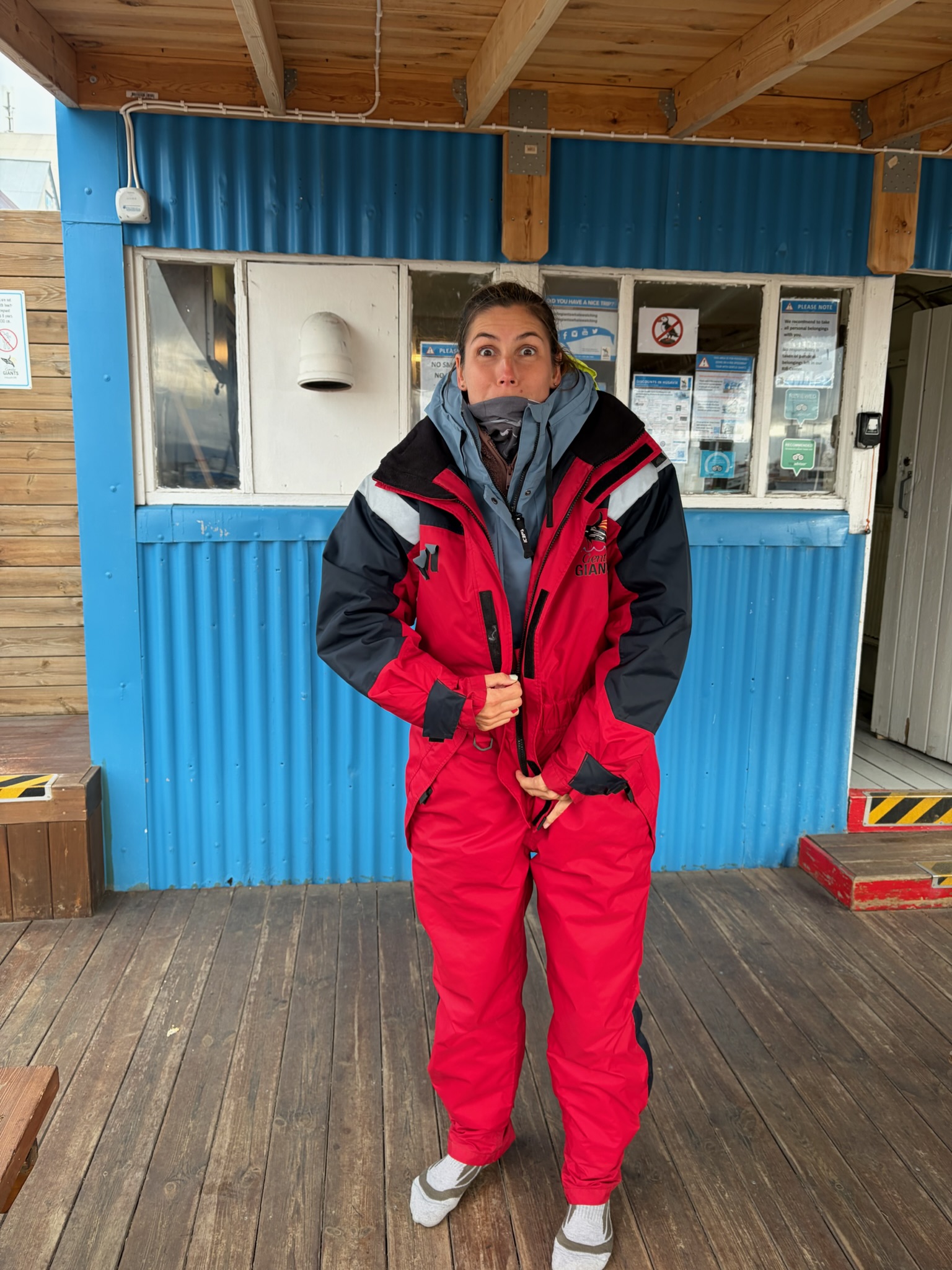
Und dann wurde es ernst: Um 15:30 Uhr startete unsere Speedboat-Whale-Watching-Tour beim Anbieter "Gentle Giants". Anders als die gemütlichen, großen Eichenboote setzt man hier auf schnelle Schlauchboote, mit denen man deutlich flotter und wendiger im Fjord unterwegs ist - was sich noch als Gold wert herausstellen sollte.
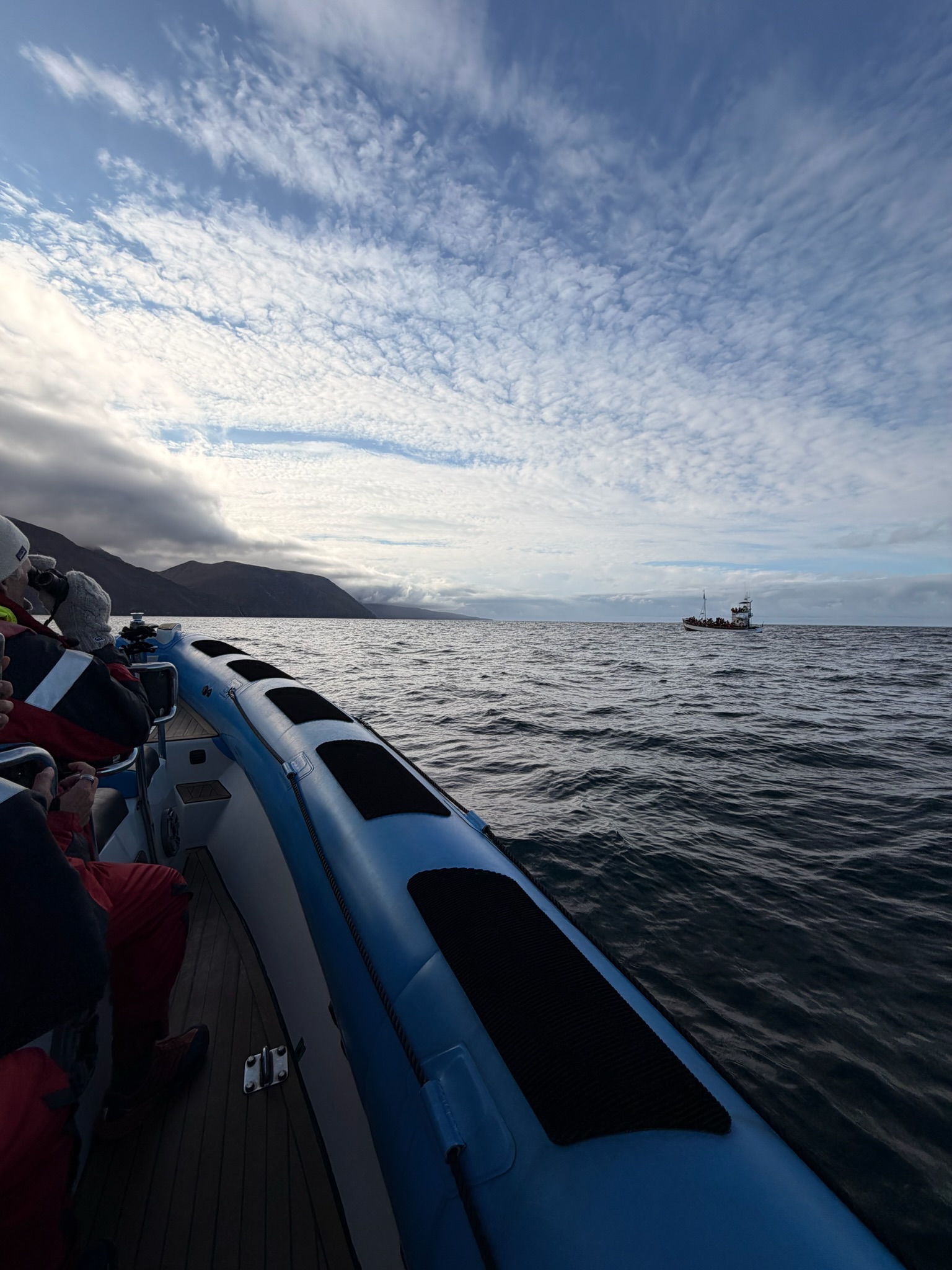
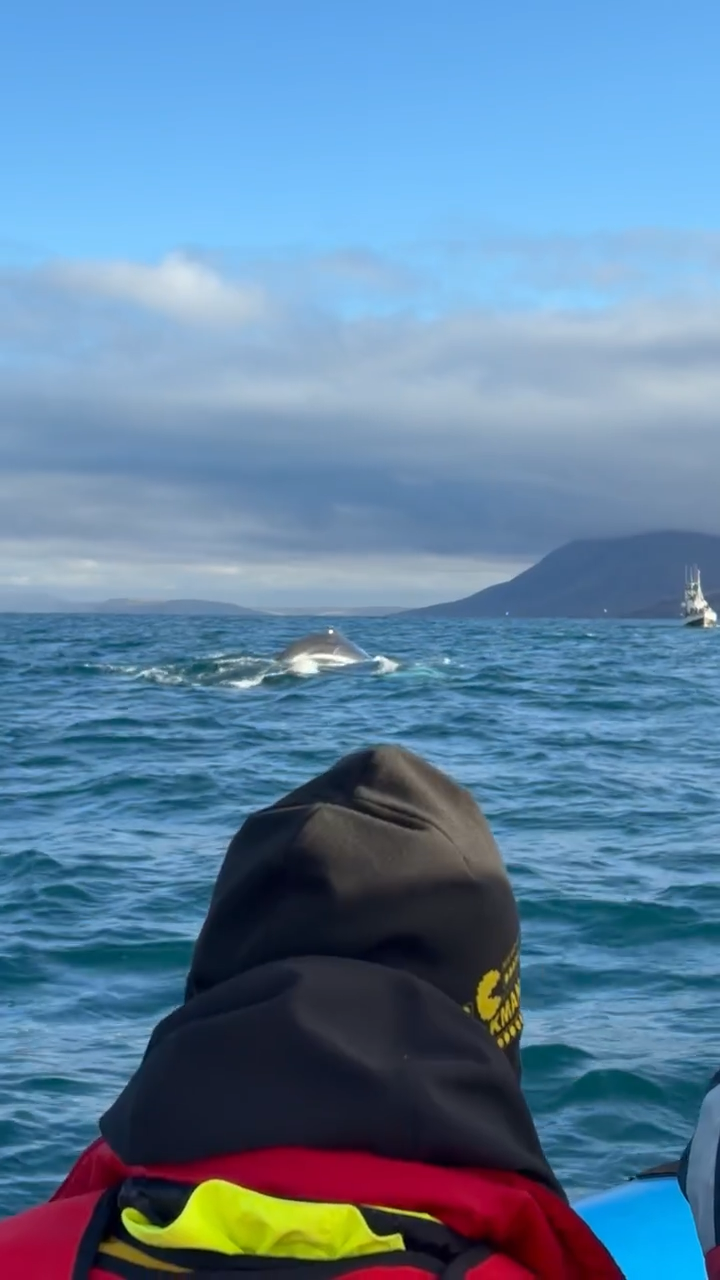
Wir fuhren etwa 25 bis 30 Minuten auf die andere Seite des Fjords, und schon nach relativ kurzer Zeit war es soweit: In der Ferne durchbrachen zwei Buckelwale die Wasseroberfläche. Unser Guide, ein Holländer namens Jelmer, der eine wirklich beeindruckende Ahnung von Walen und allem drumherum hatte, erkannte die beiden sofort und meinte, es handle sich vermutlich um "Miss Madeira" und "Primero".
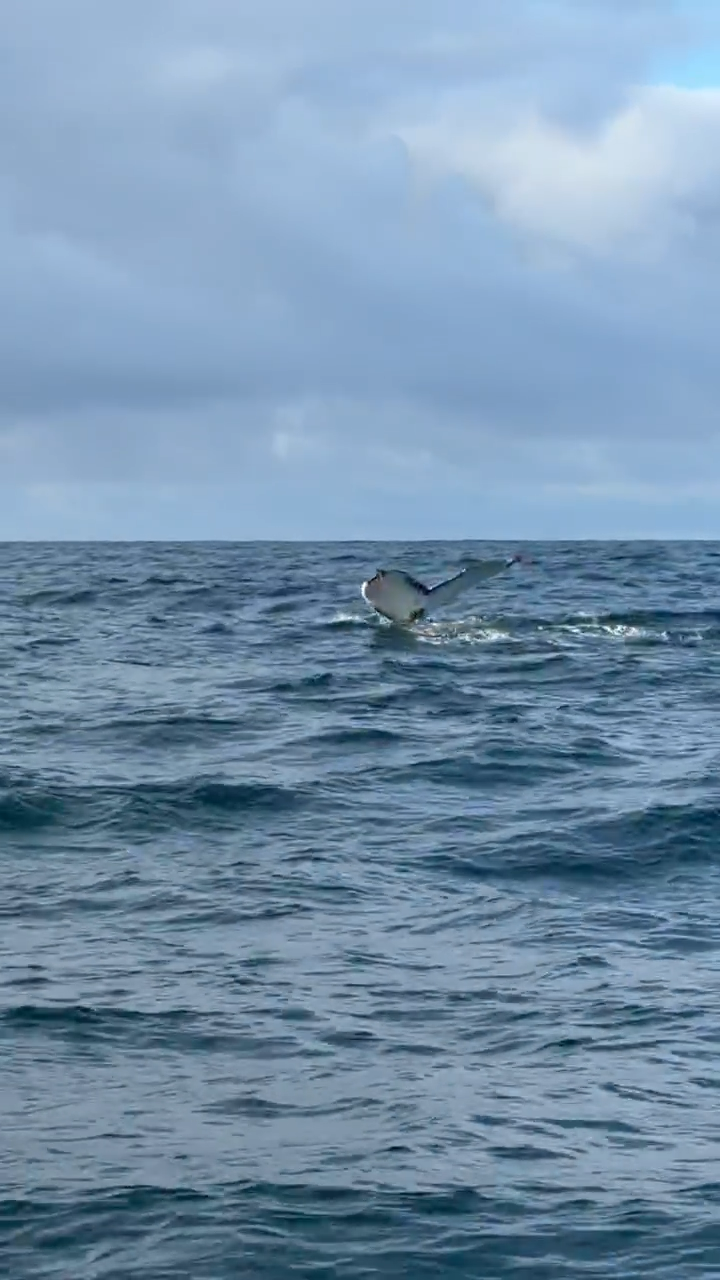
Was ich faszinierend fand: "Woher weiß so ein Guide bitte, welcher Wal das ist?" Die Antwort lautet: an der Fluke, also der Schwanzflosse. Jeder Buckelwal hat auf der Unterseite seiner Fluke ein völlig einzigartiges Muster aus schwarzen und weißen Pigmenten sowie eine ganz eigene Form und Kerbung der Hinterkante - quasi ein Fingerabdruck, so individuell, dass sich damit jedes einzelne Tier zweifelsfrei identifizieren lässt. Und weil das so gut funktioniert, gibt's eine geniale Plattform namens "Happywhale", eine Art weltweite Datenbank, in die jeder seine Flossenfotos hochladen kann. Die Webseite gleicht das Muster ab und spuckt einem aus, um welches Individuum es sich handelt, wo es schon überall gesichtet wurde und wie oft. So werden aus anonymen Walen plötzlich alte Bekannte mit Namen und Sichtungsgeschichte.
https://youtube.com/shorts/syMUETm3Xys?feature=share
Madeira und Primero begleiteten uns dann einige Minuten lang, tauchten immer wieder ab und auf, und demonstrierten uns dabei mehrfach aus nur wenigen Metern Abstand zum Boot ihre unglaubliche Grazie und gleichzeitig ihre gewaltige Größe. So ein Tier, das lautlos und in aller Ruhe direkt neben einem durchs Wasser gleitet, größer als das Boot, auf dem man sitzt - das ist schlichtweg unbeschreiblich und geht einem schon sehr nahe.
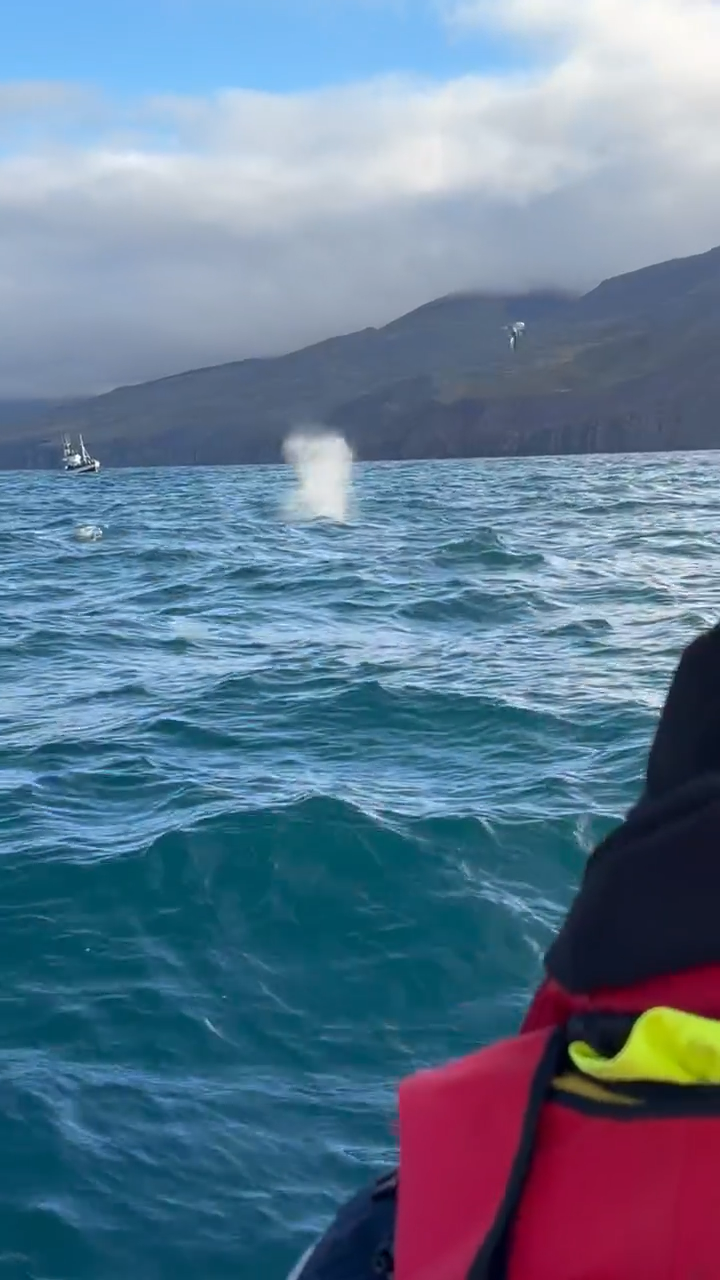
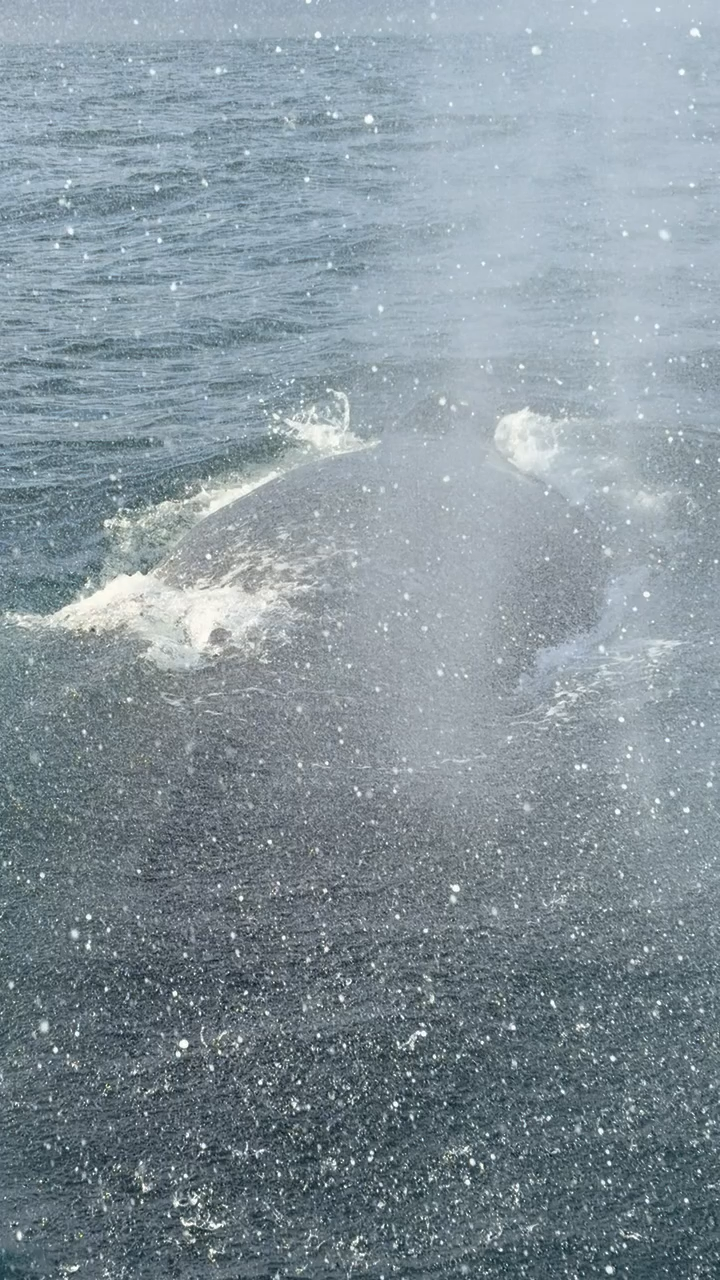
Danach hieß es weiterziehen, denn über Funk hörten wir von weiteren Sichtungen in der Umgebung. Und kaum losgefahren, sahen wir schon in weiter Ferne einen dritten Wal, der eindrucksvoll Wasser in die Höhe "sprühte". Auch dazu ein kurzer Exkurs: Dieses Sprühen nennt man den "Blas" (englisch "blow" oder "spout"), und es ist im Grunde nichts anderes als das Ausatmen des Wals. Wenn er nach dem Tauchen an die Oberfläche kommt, stößt er durch sein Blasloch die verbrauchte, warme und feuchte Luft explosionsartig aus, welche in der kühleren Außenluft zu genau dieser typischen Fontäne kondensiert. Wir fanden das Tier, es handelte sich um "Khaleesi" - was heißt “wir fanden” das Tier - eher fand das Tier uns. Wir fuhren zum ungefähren Ort wo wir es davor gesehen hatten und ließen uns dann etwas treiben ohne dass wir wussten wo genau “Khaleesi” wieder auftauchen würde. Und aus dem Nichts keine 2 Meter von uns entfernt, taucht sie auf und “sprüht” unser gesamtes Boot mit Wasser voll - Wow…. damit hat wohl keiner - nichtmal unser Guide - gerechnet. Danach bewegt sich “Khaleesi” noch wie auf einer Wolke schwebend ein paar mal neben unserem treibenden Boot zw. Wasseroberfläche und 1-2 Meter unter Wasser auf und ab und verabschiedet sich mit einem “Flukenschlag” in tiefere Gewässer.
https://youtube.com/shorts/6xMq92y6f3E?feature=share
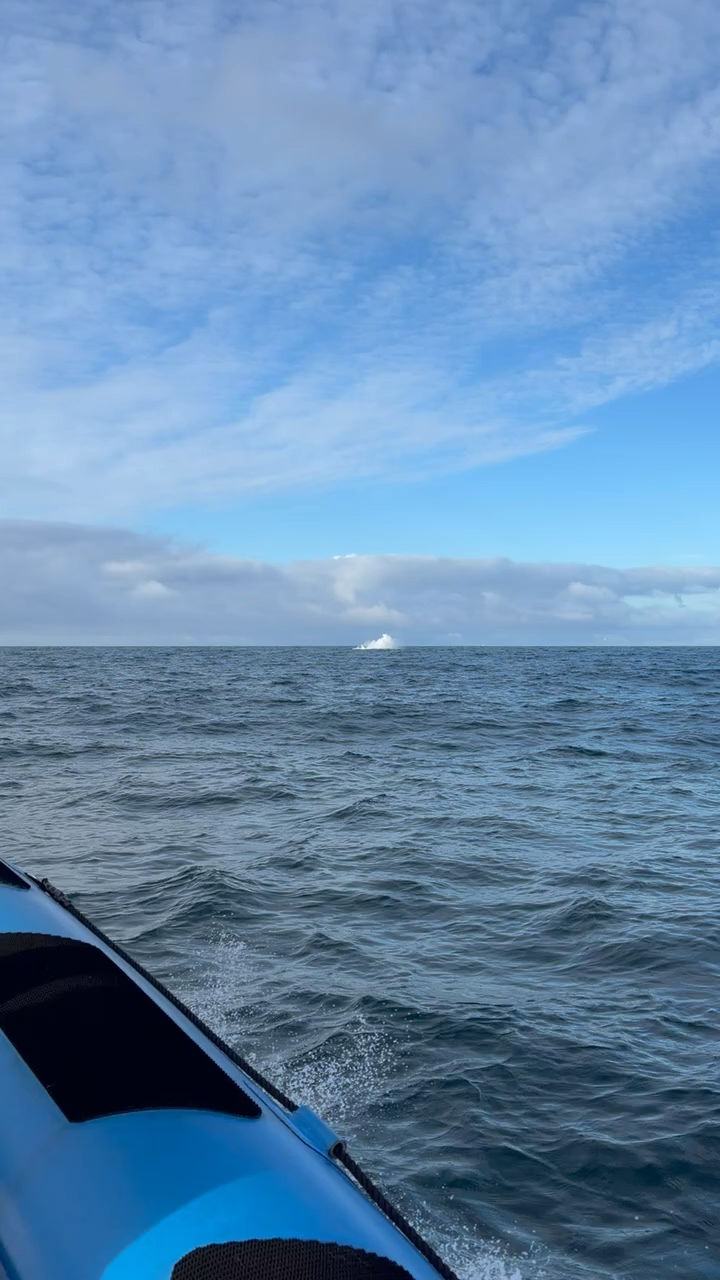
Und während wir noch geduldig darauf warteten, dass Khaleesi nach ihrem Abtauchen wieder auftauchen würde, passierte etwas, das uns endgültig sprachlos machte: In vielleicht einem Kilometer Entfernung durchbrach ein vierter Buckelwal geradezu archaisch die Oberfläche (er hieß übrigens “Archaisch”) - er "breachte", also sprang mit seinem gesamten, tonnenschweren Körper aus dem Wasser. Und das nicht nur einmal, sondern bestimmt fünf- bis sechsmal hintereinander, wobei er sich jedes Mal in voller Größe präsentierte und mit einem gewaltigen Klatschen zurück ins Meer krachte. Warum Wale das tun, ist unter Forschern übrigens bis heute nicht restlos geklärt - die Theorien reichen von Kommunikation über das Abschütteln von Parasiten bis hin zu schlichtem Spieltrieb. Wir gaben natürlich sofort Vollgas in seine Richtung, aber wie das Leben so spielt, war die große Sprungeinlage bei unserer Ankunft leider schon vorbei. Ein paar Mal bekamen wir ihn noch zu Gesicht, doch danach ging's auch schon wieder zurück in den Hafen von Húsavík.
Und weil unserem Guide “Jelmer” das Thema “Wale” offensichtlich so am Herzen lag, gab's auch direkt noch eine kleine Biologie-Stunde für uns: Wale sind nicht nur beeindruckend anzusehen, sie sind echte Klimaschützer. Wie soll das funktionieren? Wale tauchen zum Fressen in die Tiefe und kommen zum Atmen an die Oberfläche zurück. Ihr nährstoffreicher Kot wirkt dort oben wie ein gewaltiger natürlicher Dünger und versorgt das Phytoplankton mit lebenswichtigen Stoffen wie Eisen und Stickstoff.
Und dieses Phytoplankton, diese mikroskopisch kleinen Algen, sind wiederum absolute Schwergewichte fürs Klima: Sie produzieren rund die Hälfte des Sauerstoffs, den wir alle atmen, und binden dabei enorme Mengen an CO₂ aus der Atmosphäre. Mehr Wale bedeuten also mehr Plankton, und mehr Plankton bedeutet mehr Sauerstoff und weniger CO₂. Dazu kommt, dass so ein gewaltiger Wal über sein langes Leben selbst tonnenweise Kohlenstoff im eigenen Körper speichert - und wenn er irgendwann stirbt, sinkt dieser Kohlenstoff mit ihm auf den Meeresgrund, wo er für Jahrhunderte gebunden bleibt (und nebenbei noch ein ganzes Ökosystem am Tiefseeboden mit Nahrung versorgt). Ein einziger Großwal bindet auf diese Weise im Laufe seines Lebens soviel CO₂ wie in etwa 1.500 Bäume.
Kurzum: Diese sanften Riesen sind weit mehr als nur ein unfassbares Erlebnis und Fotomotiv - sie halten ganze Ökosysteme am Laufen und leisten dabei einen Beitrag im Kampf gegen den Klimawandel. Ein weiterer, ziemlich guter Grund also, warum es sich mehr als lohnt, diese Tiere und ihren Lebensraum zu schützen. (was übrigens nicht selbstverständlich ist - die Buckelwal-Population hat die Menschheit bis zu den 70ern nämlich bereits schonmal um die Hälfte auf ca. 70.000 Tiere weltweit reduziert - aufgrund guter Schutzinitiativen konnte sich die Population nun wieder auf ca. 150.000 Tiere erholen. Aber man sieht - es liegt an uns, dass wir diese wunderbaren Geschöpfe noch viele Jahre sehen und bewundern dürfen.
Zum Abschluss erzählte uns Jelmer auf der Rückfahrt noch etwas, das uns nachdenklich zurückließ und diesen Tag perfekt einrahmte: nämlich wie wichtig genau solche Whale-Watching-Touren eigentlich sind. Zum einen, um uns Menschen die Nähe zu diesen faszinierenden Geschöpfen überhaupt erst zu ermöglichen, und zum anderen, um dadurch eine emotionale Verbindung aufzubauen - eine Verbindung, die hoffentlich dazu beiträgt, dass wir künftig besser mit diesen Tieren und unserer Umwelt insgesamt umgehen. Denn man schützt am Ende eben nur das, was man kennt und gewisse Emotionen in einem auslöst.
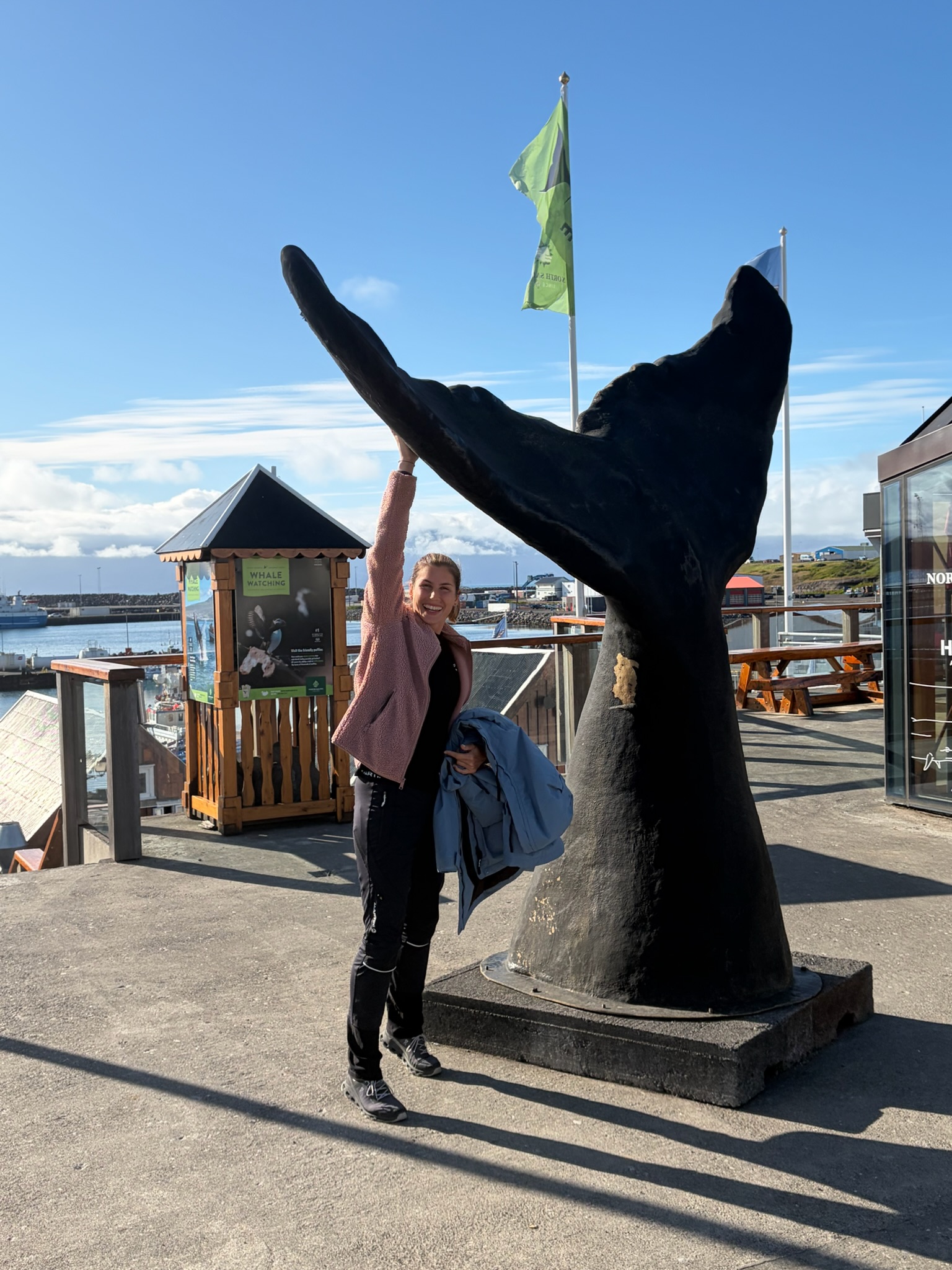
PS: nach einer fantastischen Aufholjagd führe ich erstmals in unserer Suzuki Jimny Challenge mit 17:12 - das werde ich mir nicht mehr nehmen lassen!
Today we headed on from our campsite in Laugar towards Húsavík - and this small place had one of the absolute highlights of the entire trip in store for us (at least for me - Patci already got to experience something similar during her semester abroad in Canada). A bit of context first: Húsavík is a tranquil coastal town of just around 2,300 inhabitants, lying right on the Skjálfandi bay - and which has, entirely rightly, written the title "whale capital of Iceland" (some even say of Europe) on its banner. The nutrient-rich waters of the bay are, in summer, one single, huge feeding table for whales, which is why year after year around 100,000 people set out to sea from here to encounter exactly these gentle giants. But first things first…
We started the day very cosily in a few of the town's cute souvenir shops, before it went on to the Húsavík Whale Museum. And this museum is really worth a visit: it's housed in the town's former slaughterhouse and, over around 1,600 m², holds 12 real whale skeletons. The absolute showpiece - and here it gets briefly number-heavy for all those interested - is the 25-metre (!) long skeleton of a blue whale, the largest animal living on our planet. On the upper level you walk along the so-called "Whale Walk", i.e. right through between the suspended skeletons of the various species, and thus get a real feel for the sheer dimension of these animals. On the side, the museum also conducts active research on the whales of the Skjálfandi bay - a point that would become important again later in the day.
Before it went out on the water, though, a proper feed was in order first, and we got that at the restaurant "Naustið" - a small, fine fish restaurant in the middle of town. The place is housed in a building that looks rather old from the outside and has a certain charm. Freshly caught fish, "lava bread" baked in geothermal springs and fish soup, for which the house is practically famous - exactly what we need to start into the rest of the day.
And then it got serious: at 3:30 pm our speedboat whale-watching tour started with the provider "Gentle Giants". Unlike the cosy, large oak boats, here they rely on fast inflatable boats with which you're noticeably quicker and more manoeuvrable in the fjord - which would turn out to be worth its weight in gold.
We drove about 25 to 30 minutes to the other side of the fjord, and already after a relatively short time it was time: in the distance two humpback whales broke the water's surface. Our guide, a Dutchman named Jelmer, who had a really impressive knowledge of whales and everything around them, recognised the two immediately and said they were probably "Miss Madeira" and "Primero".
What I found fascinating: "How on earth does such a guide know which whale it is?" The answer is: by the fluke, i.e. the tail fin. Every humpback whale has, on the underside of its fluke, a completely unique pattern of black and white pigments as well as its very own shape and notching of the trailing edge - practically a fingerprint, so individual that every single animal can be unambiguously identified by it. And because that works so well, there's a brilliant platform called "Happywhale", a kind of worldwide database into which anyone can upload their fluke photos. The website matches the pattern and spits out which individual it is, where it's already been sighted and how often. That way, anonymous whales suddenly become old acquaintances with names and a sighting history.
https://youtube.com/shorts/syMUETm3Xys?feature=share
Madeira and Primero then accompanied us for a few minutes, kept diving down and surfacing, and demonstrated to us several times, from just a few metres from the boat, their incredible grace and at the same time their enormous size. Such an animal, silently and calmly gliding through the water right next to you, bigger than the boat you're sitting on - that's simply indescribable and really gets to you.
After that it was time to move on, because over the radio we heard of further sightings in the area. And barely underway, we already saw a third whale far in the distance, impressively "spraying" water up into the air. A short excursion on that too: this spraying is called the "blow" (or "spout"), and it's basically nothing other than the whale exhaling. When it comes to the surface after diving, it explosively expels the used, warm and moist air through its blowhole, which condenses in the cooler outside air into exactly this typical fountain. We found the animal, it was "Khaleesi" - well, "we found" the animal - rather the animal found us. We drove to the approximate spot where we'd seen it before and then let ourselves drift a bit without knowing exactly where "Khaleesi" would resurface. And out of nowhere, not even 2 metres away from us, she surfaces and "sprays" our entire boat full of water - Wow…. no one - not even our guide - had reckoned with that. After that, "Khaleesi" moves up and down a few more times, as if floating on a cloud, next to our drifting boat, between the water's surface and 1-2 metres underwater, and says goodbye with a "fluke slap" into deeper waters.
https://youtube.com/shorts/6xMq92y6f3E?feature=share
And while we were still patiently waiting for Khaleesi to resurface after her dive, something happened that finally left us speechless: at perhaps a kilometre's distance, a fourth humpback whale broke the surface almost archaically (his name, by the way, was "Archaic") - he "breached", i.e. jumped with his entire, tonne-heavy body out of the water. And not just once, but surely five to six times in a row, presenting himself in full size each time and crashing back into the sea with a mighty splash. Why whales do this is, by the way, still not fully clarified among researchers - the theories range from communication to shaking off parasites to simple playfulness. We of course immediately went full throttle in his direction, but as life would have it, the great jumping display was unfortunately already over by the time we arrived. A few more times we still got him into view, but after that it was already back to the harbour of Húsavík.
And because our guide "Jelmer" obviously had the topic of "whales" so close to his heart, there was also a little biology lesson for us right away: whales are not only impressive to look at, they're real climate protectors. How does that work? Whales dive into the depths to feed and come back to the surface to breathe. Their nutrient-rich excrement acts up there like a huge natural fertiliser and supplies the phytoplankton with vital substances like iron and nitrogen.
And this phytoplankton, these microscopically small algae, are in turn absolute heavyweights for the climate: they produce around half of the oxygen we all breathe, and in doing so bind enormous amounts of CO₂ from the atmosphere. More whales thus mean more plankton, and more plankton means more oxygen and less CO₂. On top of that, such a mighty whale itself stores tonnes of carbon in its own body over its long life - and when it eventually dies, this carbon sinks with it to the sea floor, where it remains bound for centuries (and, on the side, supplies a whole ecosystem on the deep-sea floor with food). A single great whale binds, in this way over the course of its life, about as much CO₂ as roughly 1,500 trees.
In short: these gentle giants are far more than just an incredible experience and photo motif - they keep entire ecosystems running and, in doing so, make a contribution in the fight against climate change. Another, pretty good reason, then, why it's more than worth protecting these animals and their habitat. (which, by the way, is not a given - by the 70s, humanity had already once reduced the humpback whale population by half to about 70,000 animals worldwide - thanks to good protection initiatives, the population has now been able to recover to about 150,000 animals. But you see - it's up to us whether we get to see and admire these wonderful creatures for many more years.
To finish, Jelmer told us something on the way back that left us thoughtful and framed this day perfectly: namely how important exactly such whale-watching tours actually are. On the one hand, to make the closeness to these fascinating creatures possible for us humans in the first place, and on the other, to thereby build an emotional connection - a connection that will hopefully contribute to us treating these animals and our environment as a whole better in the future. Because in the end you only protect what you know and what triggers certain emotions in you.
PS: after a fantastic comeback, I'm leading for the first time in our Suzuki Jimny challenge, 17:12 - I won't let that be taken from me anymore!
Bis bald!
Jürgen